

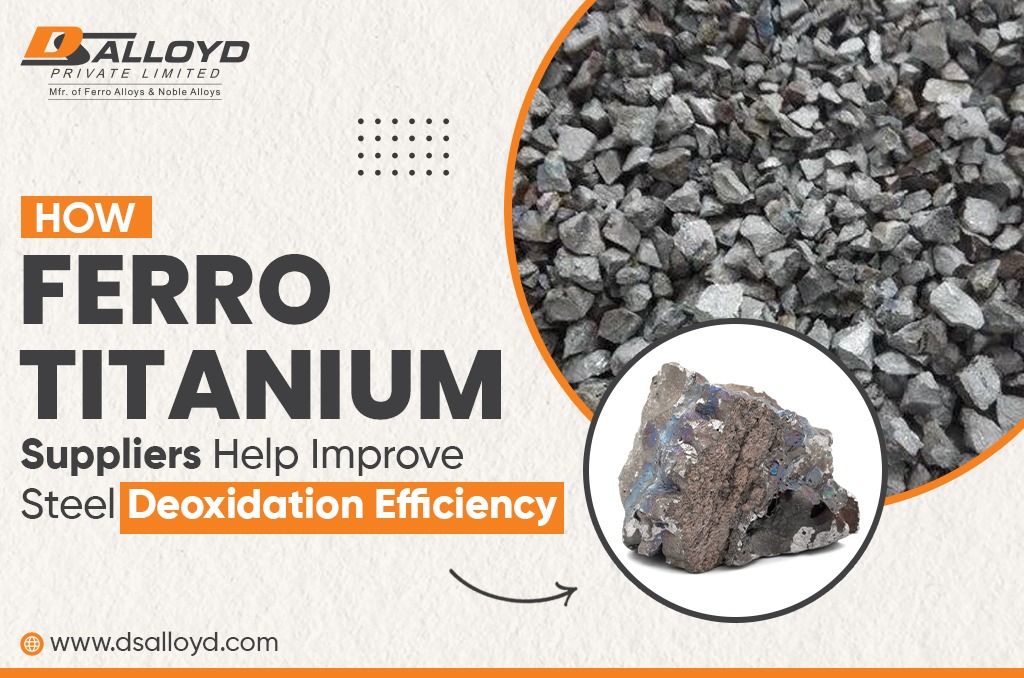
How Ferro Titanium Suppliers Help Improve Steel Deoxidation Efficiency
Steelmaking is a carefully balanced chemical process. While strength, hardness, and durability often receive the most attention, the foundation of high-quality steel begins much earlier — inside the furnace during deoxidation.
Oxygen is one of the most critical elements to control in molten steel. If not properly removed, it forms unwanted oxides, weakens the internal structure, and reduces mechanical performance. Efficient deoxidation ensures cleaner steel, improved toughness, and consistent properties.
Among the various deoxidizing agents used in steel plants, ferro titanium plays a specialized and highly effective role. However, the real impact depends not only on the alloy itself but on the quality, consistency, and technical reliability of the ferro titanium supplier.
A dependable supplier directly influences deoxidation efficiency, alloy recovery, steel cleanliness, and cost optimization.
The Science Behind Deoxidation in Steelmaking
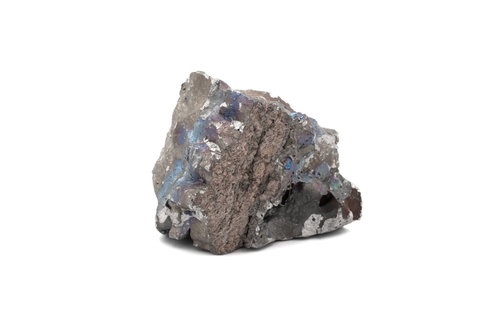
Ferro Titanium Suppliers
When iron ore is reduced and melted, oxygen remains dissolved in the molten steel bath. During refining, this oxygen must be controlled because it reacts with carbon and other alloying elements to form oxides and gas bubbles.
If oxygen remains excessive, the steel may suffer from:
- Blowholes and porosity
- Oxide inclusions
- Reduced fatigue life
- Surface cracking
- Lower impact resistance
Deoxidation is achieved by adding elements that have a stronger affinity for oxygen than iron does. These elements react with oxygen to form stable oxides that separate from the molten steel.
Titanium is one of the strongest oxygen-reactive elements used in steelmaking. This is where ferro titanium becomes essential.
Why Ferro Titanium Is Highly Effective in Oxygen Control
Titanium forms extremely stable titanium oxides (TiO₂) and titanium nitrides (TiN). These compounds are thermodynamically stable at steelmaking temperatures, which means they form quickly and remain stable during solidification.
This stability provides multiple advantages:
- Rapid oxygen binding
- Reduced dissolved oxygen levels
- Improved control over inclusion morphology
- Better grain refinement
Unlike some deoxidizers that react partially, titanium has a strong chemical affinity that ensures effective oxygen scavenging when used correctly.
However, the reaction efficiency depends heavily on alloy purity and particle behavior — both controlled by the supplier.
How Ferro Titanium Suppliers Directly Influence Deoxidation Efficiency
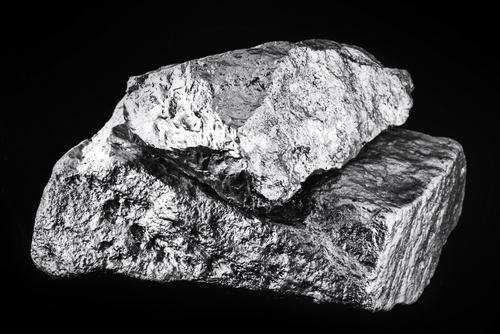
Ferro Titanium Suppliers
1. Chemical Composition Control
Deoxidation calculations depend on predictable titanium content. A professional ferro titanium supplier maintains narrow tolerance levels for titanium percentage.
If titanium levels fluctuate, steel mills may experience:
- Under-deoxidation (residual oxygen remains high)
- Over-addition (excess inclusions and higher cost)
Stable composition allows metallurgists to calculate precise additions, reducing variability between heats.
2. Low Impurity Management
Impurities such as sulfur, phosphorus, aluminum, and trace unwanted metals can interfere with deoxidation reactions. High impurity levels may:
- Compete with titanium during oxygen reactions
- Create undesirable inclusions
- Affect weldability and toughness
Trusted suppliers apply refining techniques and rigorous testing to keep impurity levels minimal, ensuring clean metallurgical performance.
3. Optimized Particle Size and Physical Structure
The dissolution rate of ferro titanium in molten steel is influenced by particle size, density, and surface condition.
Properly sized material ensures:
- Faster melt integration
- Uniform dispersion
- Improved reaction kinetics
If particles are too large, dissolution slows. If too fine, oxidation loss increases. Experienced suppliers understand this balance and manufacture ferro titanium accordingly.
4. Higher Alloy Recovery Rates
Recovery rate refers to how much of the added titanium effectively remains in the final steel composition. Poor-quality material can result in:
- Titanium trapped in slag
- Oxidation before effective reaction
- Lower net recovery
Higher recovery rates reduce total alloy consumption per ton of steel, directly improving cost efficiency.
Even a 2–3% improvement in recovery can significantly reduce long-term alloy expenditure in high-volume steel plants.
5. Improved Inclusion Control
Modern steelmaking does not only remove oxygen; it also controls inclusion size and distribution. Ferro titanium helps form stable and fine inclusions that do not compromise mechanical properties.
A high-quality supplier ensures uniform alloy behavior, which supports predictable inclusion engineering — especially important in automotive, structural, and pressure vessel steels.
6. Supply Stability for Continuous Operations
Steel plants operate around the clock. Disruptions in ferro titanium supply can cause:
- Production scheduling issues
- Chemistry adjustments under pressure
- Increased operational stress
Reliable suppliers provide stable inventory planning, timely deliveries, and long-term supply agreements that support uninterrupted production.
The Economic Impact of Efficient Deoxidation
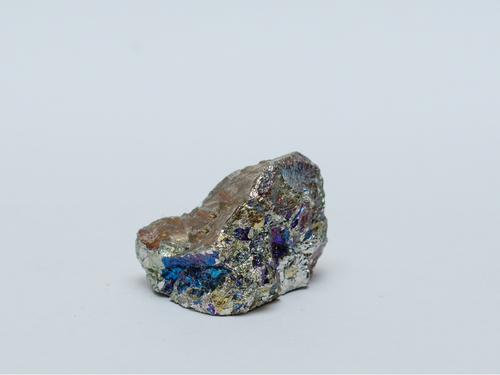
Ferro Titanium Suppliers
Deoxidation efficiency is not only a metallurgical issue — it is a financial one.
When oxygen control is optimized, steel plants benefit from:
- Lower reject rates
- Reduced reprocessing
- Better mechanical consistency
- Improved downstream processing performance
- Enhanced customer satisfaction
Poor deoxidation, on the other hand, increases scrap generation, energy consumption, and alloy wastage.
Over time, these inefficiencies significantly affect profitability.
Ferro Titanium in Modern Clean Steel Practices
As industries demand higher-grade steels for automotive safety components, infrastructure projects, and heavy engineering, clean steel practices have become critical.
Ferro titanium suppliers contribute to clean steel initiatives by:
- Supporting low-inclusion metallurgy
- Helping reduce nitrogen sensitivity
- Improving weld integrity
- Enabling consistent microstructure refinement
In advanced applications, even micro-level chemistry control matters. This level of precision requires dependable alloy suppliers.
The Strategic Role of Alloy Partnerships
In today’s competitive steel industry, alloy sourcing is no longer transactional. Steel mills increasingly prefer long-term partnerships with suppliers who understand metallurgical processes.
Such partnerships lead to:
- Better process optimization
- Lower overall alloy consumption
- Stable cost planning
- Improved technical collaboration
Ferro titanium suppliers who provide transparency, documentation, and technical insight become valuable contributors to operational success.
Supporting Steel Chemistry Beyond Deoxidation
Efficient deoxidation works best when supported by balanced alloy additions. Materials such as manganese and noble alloys also play important roles in achieving desired mechanical properties.
A comprehensive alloy supply strategy strengthens overall production reliability.
How Dsalloyd Pvt Ltd Supports Steel Manufacturers
Dsalloyd LOGO
Dsalloyd Pvt Ltd supplies high-quality alloy materials designed to support consistent and efficient steel production.
Their offerings include:
- Manganese Metal Flakes used for steel chemistry adjustment and alloy control
- Noble Alloys for specialized metallurgical requirements
With a commitment to reliable supply, consistent quality, and industry-focused solutions, Dsalloyd Pvt Ltd helps steel manufacturers maintain process stability and metallurgical performance.
To learn more about their alloy solutions, visit:
https://www.dsalloyd.com/
Frequently Asked Questions (FAQs)
Why is ferro titanium preferred over other deoxidizers?
Titanium has a strong affinity for oxygen and nitrogen, forming stable compounds that improve steel cleanliness and structure.
How does supplier consistency improve steel quality?
Stable chemistry allows precise addition control, reducing variability between heats and improving mechanical reliability.
Can better deoxidation reduce production costs?
Yes. Efficient oxygen control lowers reject rates, improves recovery, and reduces alloy consumption.
Does particle size really affect alloy performance?
Yes. Proper sizing ensures faster dissolution and more effective oxygen reaction inside molten steel.
Is ferro titanium only used for deoxidation?
No. It also contributes to grain refinement, nitrogen stabilization, and enhanced weldability.
Final Thoughts
Deoxidation efficiency forms the foundation of high-quality steel. Ferro titanium plays a crucial role in controlling oxygen and nitrogen levels, refining microstructure, and supporting clean steel production.
However, the effectiveness of ferro titanium depends heavily on the expertise, quality control, and reliability of the supplier.
For steel manufacturers seeking dependable alloy support, Dsalloyd Pvt Ltd offers trusted solutions through manganese metal flakes and noble alloys designed to enhance metallurgical performance and process stability.
Visit https://www.dsalloyd.com/ to strengthen your alloy sourcing strategy and support cleaner, more efficient steel production.
