

Ferro Titanium Quality Control
Buying ferro titanium is not only about checking whether the material says “70% Ti” on the quotation.
For a steel plant, even a small difference in chemistry, sizing, or material consistency can affect how the alloy behaves during addition. This is why quality control becomes important before the material reaches the furnace.
Industrial buyers often focus first on the price per tonne. That is understandable. But when ferro titanium is being used regularly, the more important question is whether the material supplied from one lot to another is reasonably consistent and matches the agreed specification.
Ferro titanium is available in different grades, with 70% titanium being one of the commonly used grades. ASTM has a specific specification for ferrotitanium, covering chemical requirements such as titanium, carbon, silicon and aluminium, along with limits for a number of other elements. ASTM Store
So, what should a buyer actually check before placing an order?
Let’s look at the practical points.
1. Start With the Titanium Content
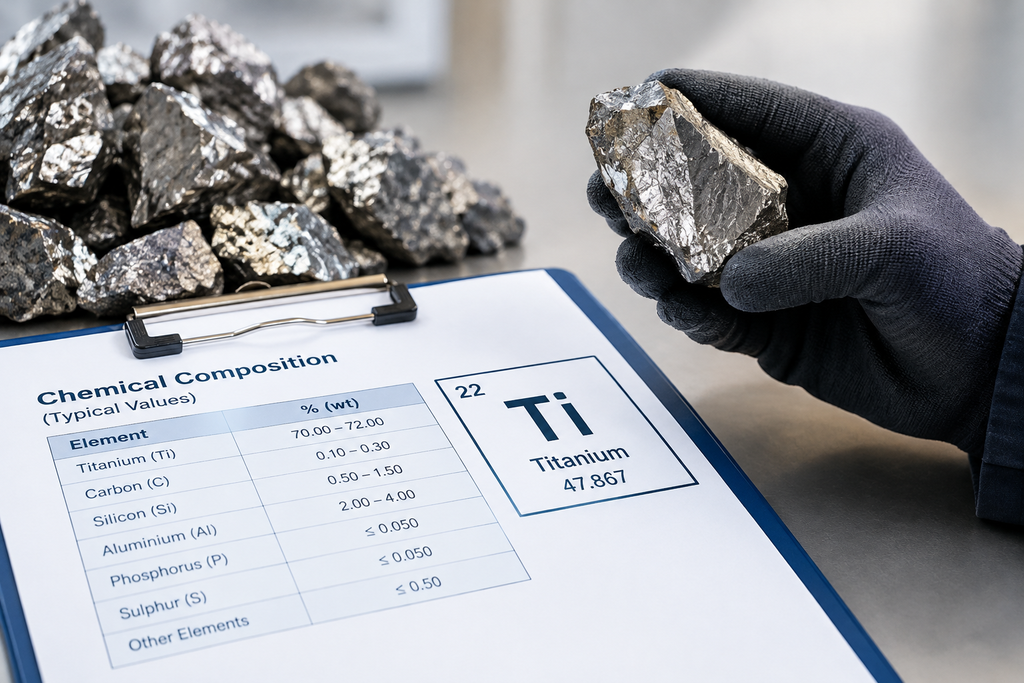
The first thing to check is obviously the titanium content.
If the requirement is Ferro Titanium 70%, the buyer should not look only at the product name. Ask for the actual chemical specification and the expected titanium range.
For example, there is a difference between saying:
“Ferro Titanium 70%”
and having a clear specification that states:
- Titanium content
- Carbon
- Silicon
- Aluminium
- Phosphorus
- Sulphur
- Other residual elements, where applicable
The actual chemistry should be agreed before the order is confirmed.
This becomes more important when the ferro titanium is being used for a steel grade with tight chemistry requirements.
2. Don’t Ignore Carbon, Silicon and Aluminium
Titanium gets most of the attention, but it is not the only element that matters.
Carbon, silicon and aluminium can also be important depending on the steel grade and the production process.
A buyer may purchase a material because it has the required titanium percentage, but if the levels of other elements are outside the plant’s acceptable range, it can create problems during the final chemistry adjustment.
ASTM’s ferrotitanium specification specifically includes requirements for titanium, carbon, silicon and aluminium, along with supplementary elements such as manganese, phosphorus, sulphur, chromium, nickel, molybdenum, copper, cobalt, vanadium and others. ASTM Store
This is why a proper technical specification is better than simply asking for a “70% grade.”
3. Check the COA, Not Just the Product Name
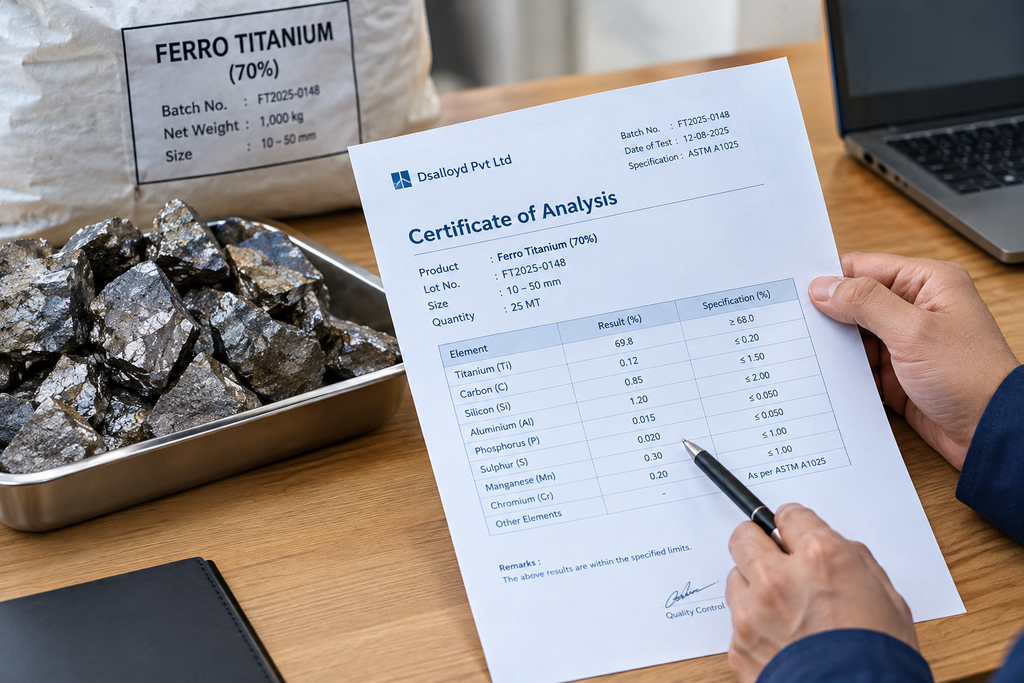
A Certificate of Analysis, or COA, is one of the most useful documents a buyer can ask for.
The COA should tell you what was actually tested in the particular material or lot.
Look for:
- Batch or lot number
- Titanium percentage
- Carbon
- Silicon
- Aluminium
- Phosphorus and sulphur, where specified
- Other agreed elements
- Test date
- Applicable specification or agreed customer specification
It is also worth checking whether the COA is connected to the actual batch being shipped.
A generic specification sheet is useful, but it is not the same thing as a batch-specific test report.
4. Particle Size or Lump Size Also Matters
This point is sometimes missed.
Ferro titanium is not simply a chemical product. It is also a physical material that has to be handled and added into a steelmaking process.
The size of the pieces can affect:
- Handling
- Storage
- Feeding
- Addition method
- Melting behaviour
- Recovery
- Addition consistency
For example, if a steel plant normally works with a particular lump size, receiving a significantly different size can create unnecessary handling problems.
ASTM also has general ferroalloy requirements that include sampling for chemical composition and size, which shows why physical sizing should not be treated as an afterthought. ASTM Store
Before ordering, buyers should clearly mention the required size range instead of assuming that every supplier’s “standard size” will be the same.
5. Look at the Material’s Physical Condition
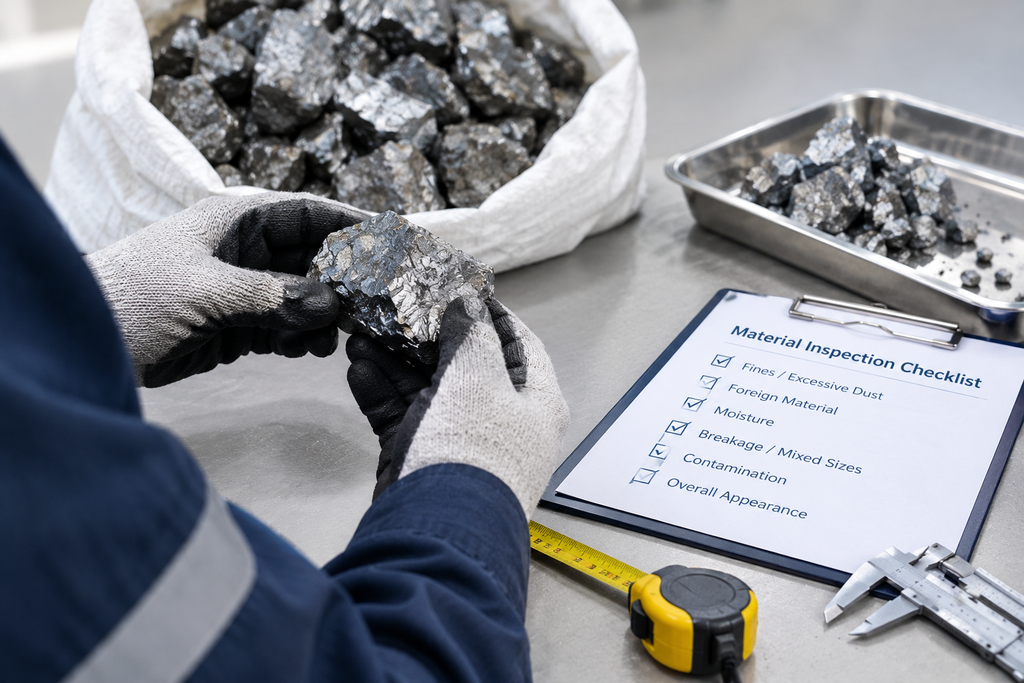
Take a close look at the actual product if samples are available.
Good quality control is not always about laboratory numbers.
The buyer should also check whether the material contains:
- Excessive fines
- Foreign material
- Unusual dust
- Excessive breakage
- Moisture
- Mixed or inconsistent sizes
- Visible contamination
A little variation is normal in bulk ferroalloy material. What matters is whether the material is reasonably consistent with the agreed product specification.
6. Ask About Sampling and Testing
One of the most overlooked parts of buying ferro alloys is sampling.
A laboratory result is only useful if the sample represents the material being supplied.
For large orders, buyers should understand how the supplier takes samples from the lot and how the material is tested.
If there is a significant difference between the supplier’s COA and the buyer’s own test result, the sampling method itself may need to be checked before deciding that the material is simply “wrong.”
This is especially important when the purchase involves several tonnes or repeated monthly supplies.
7. Check Lot-to-Lot Consistency
This is where a regular supplier can make a real difference.
Suppose a steel plant purchases Ferro Titanium 70% this month and gets one chemistry. The next month, the titanium is slightly different and some residual elements have moved noticeably.
The material may still technically be called Ferro Titanium 70%, but the steel plant may need to adjust its addition calculations.
For regular buyers, consistency from one lot to another can be more useful than a single good test result.
Ask the supplier how they maintain consistency and whether they can provide previous COAs or representative test data for regular supply.
8. Consider Titanium Recovery, Not Only Titanium Percentage
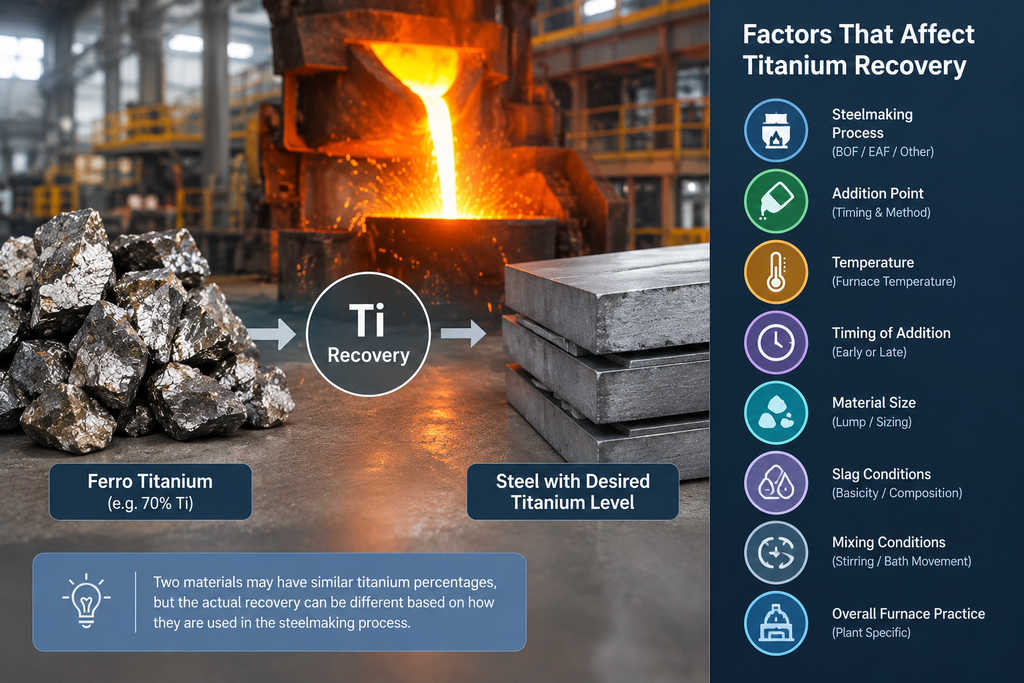
This is a more practical point for steelmakers.
The percentage written on the bag does not automatically tell you how efficiently the titanium will end up in the steel.
Actual recovery can depend on several factors, including:
- Steelmaking process
- Addition point
- Temperature
- Timing of addition
- Material size
- Slag conditions
- Mixing conditions
- Overall furnace practice
So, two materials with similar chemical analysis may not necessarily behave exactly the same way in every plant.
The supplier cannot control the entire steelmaking process, of course. But the buyer can reduce one source of variation by purchasing a material with consistent chemistry and physical characteristics.
9. Packaging Should Not Be Forgotten
Packaging sounds like a small issue until a bulk shipment arrives at the plant.
The buyer should confirm:
- Bag type
- Bag capacity
- Net weight
- Labelling
- Batch identification
- Protection during transportation
- Storage requirements
The packaging should make it easy to identify the material and connect it with the relevant batch and COA.
This becomes especially useful when a steel plant is handling several ferroalloys at the same time.
A clearly identified bag is much easier to trace than an unmarked bulk material.
10. Supplier Traceability Is Important
If there is a quality issue after the material has been consumed, the buyer should be able to answer a simple question:
“Which batch was used?”
This is why batch numbers, delivery records and COAs are useful.
For regular industrial purchasing, keeping these records can help identify whether an issue is related to a particular lot or whether the same pattern is appearing repeatedly.
It also makes communication between the purchasing, quality and production teams easier.
11. Don’t Compare Suppliers Only on Price Per Tonne
Price is obviously important in bulk alloy purchasing.
But the lowest quoted price is not always the lowest overall cost.
Suppose one supplier offers a slightly lower price but the material has greater variation in size or chemistry. The plant may need additional checks, adjustments or handling.
Another supplier may have a slightly higher price but provide more consistent material and documentation.
For a regular steelmaking operation, it makes sense to compare:
Price + chemistry + sizing + consistency + documentation + delivery reliability.
That gives a much better picture of the actual value.
12. Ask for a Clear Technical Specification Before Ordering
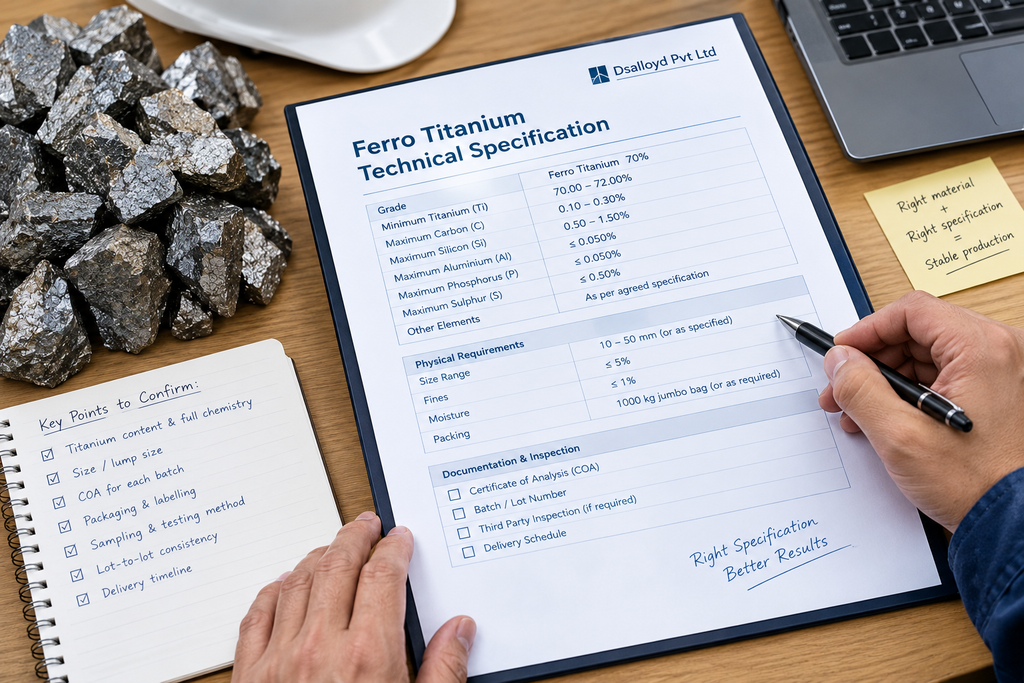
This is probably the simplest step a buyer can take.
Before issuing the purchase order, make sure both sides agree on the same specification.
The purchase specification can include:
- Ferro Titanium grade
- Minimum titanium content
- Maximum carbon
- Maximum silicon
- Maximum aluminium
- Phosphorus and sulphur limits
- Other residual elements if required
- Size range
- Packing
- Quantity
- COA requirement
- Inspection/testing requirements
ASTM’s general ferroalloy requirements are designed to work alongside individual specifications such as the ferrotitanium standard, while additional purchaser requirements can also be specified where needed. ASTM Store
This removes a lot of confusion later.
A Simple Ferro Titanium Quality Checklist for Buyers
Before approving a supplier, an industrial buyer can keep a simple checklist like this:
| What to Check | Why It Matters |
| Titanium content | Confirms the required grade |
| Carbon | Important for steel chemistry |
| Silicon | Can affect final steel chemistry |
| Aluminium | Should match the agreed specification |
| Phosphorus & Sulphur | Important for controlled steel production |
| Particle/lump size | Helps with handling and addition |
| Fines and contamination | Can affect handling and consistency |
| COA | Provides batch-level quality information |
| Batch number | Helps with traceability |
| Packaging | Prevents identification and handling issues |
| Supplier consistency | Important for repeated purchases |
| Delivery reliability | Helps avoid production interruptions |
What Makes a Good Ferro Titanium Supplier?
A good supplier should be able to discuss the product technically, not just provide a price.
When you ask about Ferro Titanium, the conversation should include the grade, chemical composition, size, packing, testing and delivery requirements.
A supplier who asks about your application and required specification is generally in a better position to supply the right material than someone who only asks, “How many tonnes do you need?”
For industrial buyers, that difference matters.
Final Thoughts
Ferro Titanium is an important alloying material, but buying it should not be treated like buying a standard commodity where the only comparison is price.
Titanium content is important, but it is only one part of quality control.
The better approach is to look at the complete material: chemical composition, physical size, consistency, testing, documentation, packaging and supplier reliability.
For regular steelmaking requirements, these checks can make purchasing much easier and can also reduce surprises when the material reaches production.
In the end, the best supplier is not necessarily the one offering the cheapest Ferro Titanium. It is the one that can consistently supply the right grade, the right chemistry and the right physical form according to your production requirement.
FAQs
The first thing is the titanium content and the complete chemical composition. Buyers should also check carbon, silicon, aluminium and other agreed residual elements rather than looking only at the Ti percentage.
No. The stated grade may be similar, but the complete chemical composition, size distribution, physical condition and other specifications can vary. This is why buyers should request a clear specification and batch-specific COA.
Particle or lump size affects handling and how the material is introduced into the steelmaking process. The suitable size depends on the plant’s addition method and operating practice.
Yes. A COA helps confirm the tested chemical composition of the supplied material. For bulk or repeated purchases, batch identification and traceability are also useful.
Depending on the steel grade and purchasing specification, buyers may need to check carbon, silicon, aluminium, phosphorus, sulphur and other residual elements. The exact limits should be agreed before ordering.
Not necessarily. The correct grade depends on the steelmaking application. A suitable product should meet the required titanium level as well as the other chemical and physical requirements of the process.
Compare the complete offer rather than only the price. Look at chemistry, size, COA, batch consistency, packaging, delivery reliability and technical support along with the quoted price.
Looking for Ferro Titanium and Other Ferro Alloys?
Dsalloyd Pvt Ltd supplies manganese metal flakes and noble alloy products for industrial and metallurgical applications. If you are looking for Ferro Titanium or need a specific alloy specification for your steelmaking requirement, you can discuss your required grade, quantity, size and chemical limits with the Dsalloyd team.
For product enquiries and bulk requirements, visit Dsalloyd Pvt Ltd and share your requirement with the team.
