

Atomized Ferro Silicon Powder
Buying raw materials for a foundry is not always as simple as checking the price and placing an order. Some materials may look similar, but they can behave differently during production. Atomized Ferro Silicon Powder is one of those materials where small differences in quality can matter.
Foundries work with different types of metals, casting methods, and production requirements. A powder that works well in one process may not be suitable for another. This is why buyers need to understand what they are purchasing instead of depending only on the product name or the supplier’s quotation.
When buying Atomized Ferro Silicon Powder, silicon content is important, but it is not the only thing worth checking. Particle size, chemical impurities, moisture, powder flow, and batch consistency can also affect how the material performs.
In this blog, we will discuss the practical things foundries should check before purchasing Atomized Ferro Silicon Powder and why these details matter in daily production.
What Is Atomized Ferro Silicon Powder?
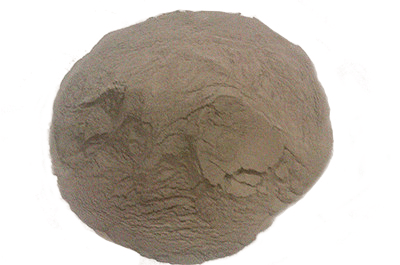
Atomized Ferro Silicon Powder is a fine powder made from an alloy of iron and silicon. During atomization, molten ferro silicon is broken into small droplets that cool and become solid particles.
The process produces powder with particle characteristics that are different from mechanically crushed ferro silicon. Depending on the manufacturing method, atomized particles can have a more rounded shape, which may improve their flow and handling properties.
Ferro silicon is used in several metallurgical applications because silicon can act as a deoxidizing element and help adjust the chemical composition of molten metal.
However, it is important to understand that not every foundry uses atomized powder in the same way.
Some processes require fine powder for controlled additions or specialized formulations. Other foundry operations may use ferro silicon lumps, granules, or dedicated inoculants instead.
The first thing a buyer should check is whether atomized powder is actually suitable for the intended application.
Choosing the right material form is just as important as choosing the correct chemical grade.
1. Check the Silicon Content Before Anything Else
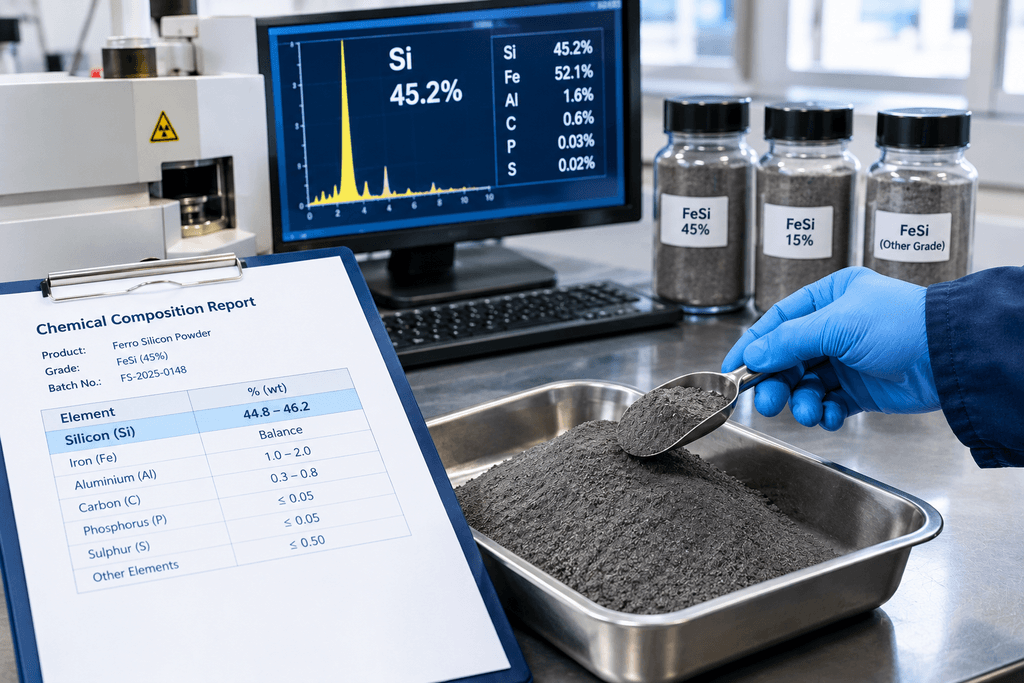
Silicon content is one of the main factors that buyers consider when purchasing Atomized Ferro Silicon Powder.
Different grades contain different percentages of silicon. For example, Ferro Silicon Powder may be available in grades containing approximately 45% or 15% silicon.
These grades are not interchangeable simply because both are called ferro silicon.
The silicon percentage influences the amount of silicon supplied by the material. It can also affect how the powder is selected for a particular industrial process.
For example, if a process requires a certain amount of silicon, using a lower-silicon grade will generally require more material to provide the same theoretical silicon input.
But there is another important point.
A higher silicon percentage does not automatically mean better material.
The correct grade depends on the foundry’s application, the required chemistry, and the way the powder will be used.
Before ordering, buyers should ask the supplier to confirm the actual silicon range rather than relying only on a grade name.
For example, a product sold as Ferro Silicon Powder 45% should have a clearly defined minimum or acceptable range for silicon content.
This makes it easier to compare different suppliers and avoid confusion during production.
2. Particle Size Can Make a Bigger Difference Than Buyers Expect
Many industrial buyers focus on chemical composition and pay less attention to particle size.
With atomized powders, this can be a mistake.
Particle size influences how the material flows, mixes, disperses, and reacts during use.
Very fine powder may create more airborne dust during handling. Coarser particles may behave differently in feeding equipment or specialized formulations.
For foundries using automated dosing systems, a change in particle size can sometimes create problems even when the chemical composition remains the same.
Consider a simple situation.
A foundry has been using a powder that moves smoothly through its feeding system. The next shipment contains a higher proportion of fine particles.
The material may still meet the required silicon percentage, but the feeding behavior could change.
The operator may notice more dust, inconsistent flow, or additional cleaning requirements.
This is why buyers should not simply ask for “fine powder.”
They should request a proper particle size specification.
Important details include:
- Required particle size range in microns or mesh
- Percentage of oversized particles
- Percentage of very fine particles
- Particle size distribution
- Testing method used by the supplier
Where particle size is especially important, buyers can also request D10, D50, and D90 values.
These values describe how particle sizes are distributed within a powder sample.
A powder with the correct average size can still perform differently if its overall particle size distribution changes.
That is something worth discussing with the supplier before placing a bulk order.
3. Do Not Ignore Aluminium, Carbon, Sulphur, and Phosphorus
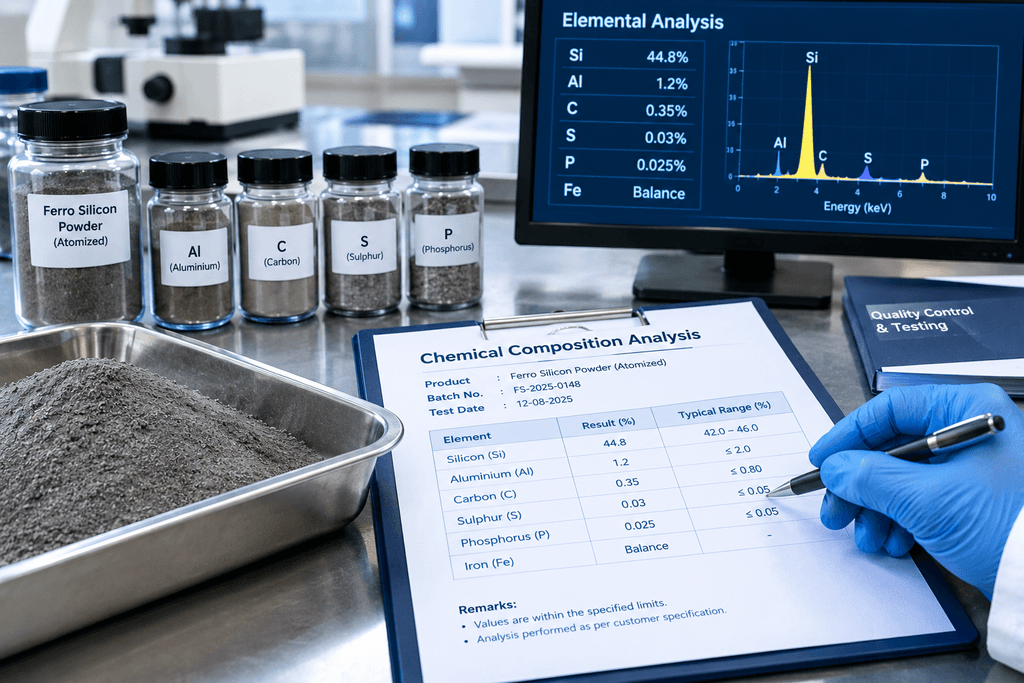
Silicon may be the main element buyers are interested in, but ferro silicon powder can also contain other elements.
Depending on the grade, these may include aluminium, carbon, phosphorus, sulphur, and smaller amounts of other elements.
The acceptable limits depend on the application.
For example, some foundry processes are more sensitive to certain impurities because they can influence the final metal chemistry or interact with other materials used during production.
This does not mean every impurity will automatically cause a casting defect.
It means buyers should know what is entering their process.
A supplier may offer two powders with similar silicon percentages but different impurity levels.
If the foundry only checks silicon content, this difference may go unnoticed.
A useful approach is to prepare a chemical specification before asking for quotations.
| Element | What Buyers Should Check |
| Silicon (Si) | Required percentage or acceptable range |
| Iron (Fe) | Balance composition and grade suitability |
| Aluminium (Al) | Maximum acceptable content |
| Carbon (C) | Whether it meets the process requirement |
| Phosphorus (P) | Maximum permitted level |
| Sulphur (S) | Maximum permitted level |
| Other elements | Additional limits required by the application |
The table is a purchasing checklist, not a universal chemical specification. Actual limits should be decided according to the foundry’s process.
Having these details in writing makes supplier comparison much easier.
4. Understand the Difference Between Atomized and Crushed Ferro Silicon Powder
This is one area where buyers sometimes get confused.
Atomized Ferro Silicon Powder and crushed Ferro Silicon Powder may have similar chemical compositions, but they are produced differently.
Crushed powder is generally made by mechanically breaking ferro silicon into smaller particles.
Atomized powder is produced by breaking molten alloy into droplets that solidify.
Because of this difference, the powders can have different particle shapes and physical characteristics.
Crushed particles are often more irregular and angular.
Atomized particles may be more rounded, depending on the atomization process.
This can influence how the powder behaves during handling and mixing.
For example, particle shape may affect:
- Powder flow through hoppers
- Mixing with other dry materials
- Packing and apparent density
- Dust generation
- Feeding consistency
Neither type is automatically better for every application.
The correct choice depends on how the foundry plans to use the material.
Before buying, ask whether the powder is genuinely atomized or mechanically crushed.
If particle shape is important for the application, buyers can request particle photographs or microscopic inspection results.
This simple check can help avoid receiving a material that has the correct chemistry but the wrong physical characteristics.
5. Check the Moisture Condition of the Powder
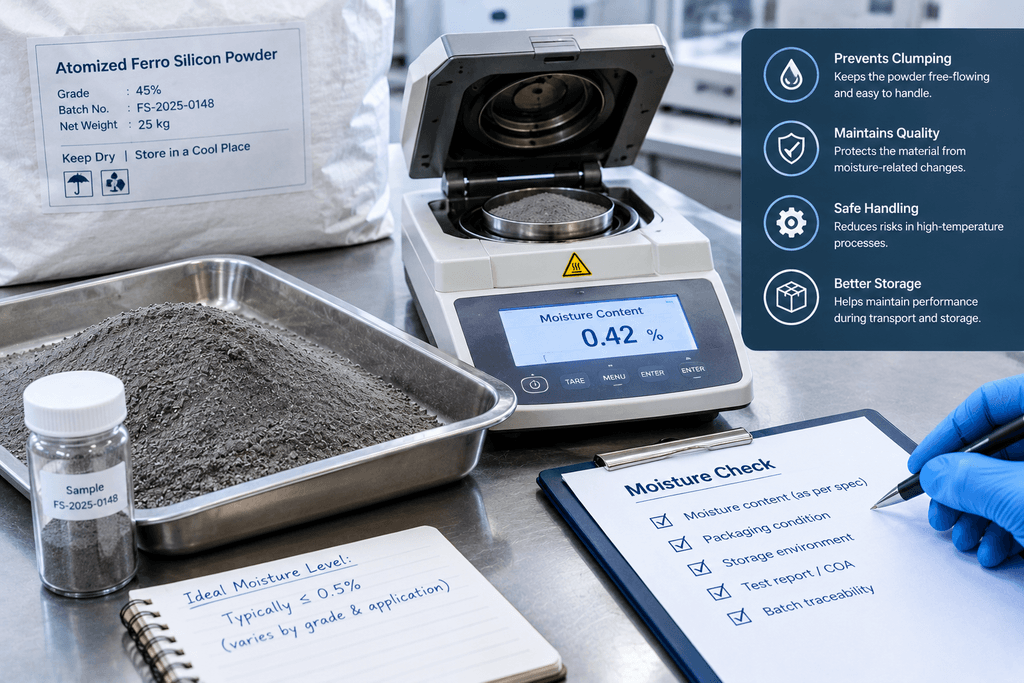
Moisture is another factor that should not be overlooked.
Industrial powders are often stored, transported, and handled in different environments before reaching the customer.
If the packaging is damaged or storage conditions are poor, moisture may affect the powder’s condition.
Excessive moisture can contribute to clumping and inconsistent powder flow.
It may also create handling concerns in processes where the powder comes into contact with hot materials.
For foundries, this is particularly important because wet materials should not be introduced into molten metal without appropriate safety controls.
A buyer should check whether the powder is supplied in a dry condition and whether the packaging is suitable for the expected storage environment.
It is also worth asking the supplier how moisture is tested and whether a maximum moisture limit can be included in the purchase specification.
A good chemical analysis is useful, but it does not tell the buyer everything about the physical condition of the delivered powder.
6. Powder Flowability Matters in Daily Foundry Operations
Powder flowability sounds like a small technical detail, but it can affect daily work.
Imagine a foundry that uses a hopper or feeding arrangement to handle powder.
When the powder flows properly, operators can maintain a more consistent material supply.
But if the material starts forming lumps or sticking inside the equipment, the process may need additional attention.
There can be several reasons for poor powder flow.
Particle size, particle shape, moisture, apparent density, and storage conditions can all play a part.
This is why two powders with similar chemical compositions may behave differently during handling.
Foundries that depend on regular powder feeding should consider asking suppliers about flowability and apparent density.
If the material is being purchased for a new application, a small handling trial can be useful before ordering a large quantity.
A simple test using the actual feeding equipment may reveal issues that are not obvious from a laboratory report.
7. Ask for a Certificate of Analysis Before Confirming the Order
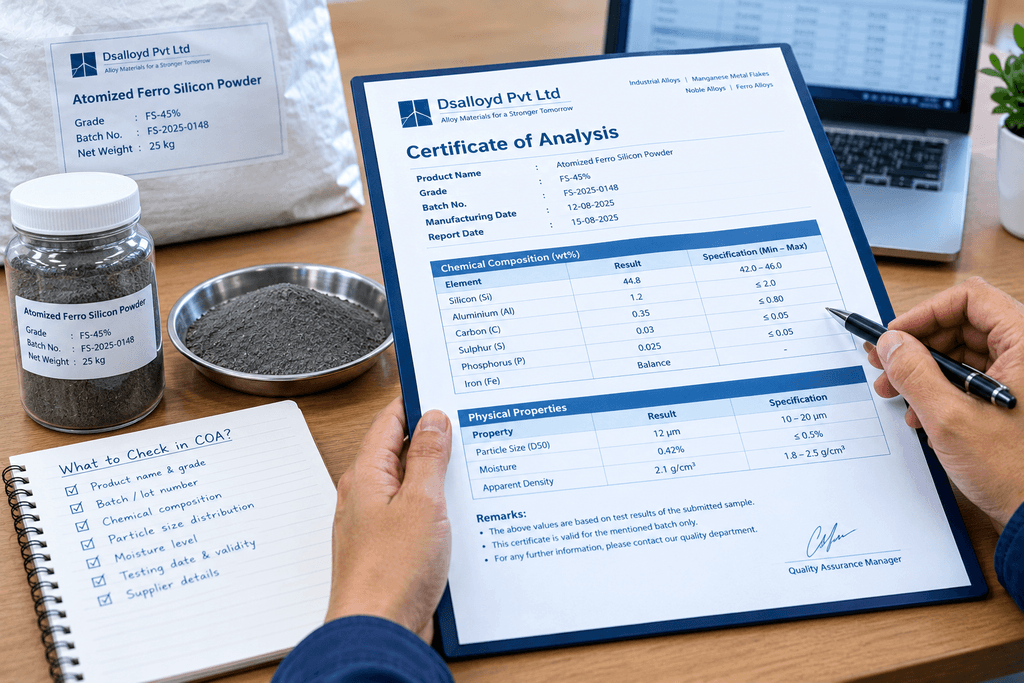
A Certificate of Analysis, commonly called a COA, is one of the most useful documents buyers can request.
It provides information about the tested chemical composition of the material.
Depending on the supplier and product, it may also include physical properties or particle size information.
However, buyers should look beyond the document heading.
A COA should ideally identify the actual material being supplied.
Important details include the product grade, batch or lot number, test results, and testing date.
For a powder where particle size matters, buyers may also request a separate particle size analysis report.
There is an important difference between a typical specification and a batch-specific COA.
A typical specification explains the limits or values a supplier normally offers.
A batch-specific COA provides test results associated with a particular production lot.
Both documents are useful, but they serve different purposes.
For repeat industrial purchases, a batch-specific COA can make quality tracking much easier.
If a production issue occurs later, the foundry can refer to the material’s batch number and related test results.
8. Check Whether the Powder Is Suitable for Your Actual Application
One mistake industrial buyers can make is selecting a material based on general product descriptions.
A supplier may mention that Atomized Ferro Silicon Powder is suitable for foundries, steelmaking, welding consumables, or other metallurgical uses.
But these applications do not all require the same powder.
For example, powder used in a welding consumable formulation may need particular particle size and flow characteristics.
A foundry using ferro silicon for a specific metallurgical addition may have different requirements.
Similarly, a process that requires controlled dry mixing may place greater importance on powder shape and size distribution.
Before purchasing, buyers should explain the intended application clearly.
Instead of asking only:
“Do you have Atomized Ferro Silicon Powder?”
A better enquiry would explain the required silicon grade, particle size, quantity, and intended use.
This gives the supplier a better chance of recommending a suitable material.
It also reduces the possibility of receiving a technically acceptable product that does not work well in the buyer’s process.
9. Check Batch-to-Batch Consistency
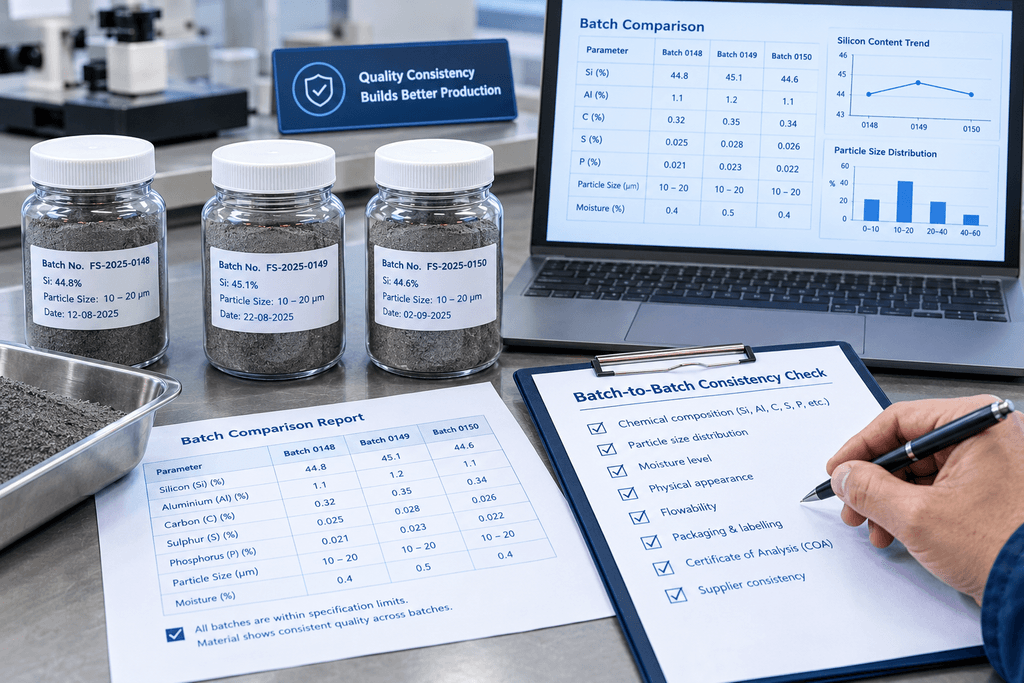
A sample may perform well during the first trial.
But what happens when the foundry starts ordering the same powder every month?
This is where batch consistency becomes important.
Industrial production depends on repeatable material quality.
If the silicon content, particle size, or powder flow changes noticeably between shipments, the foundry may need to adjust its process.
These adjustments can take time and may increase production costs.
For example, a foundry may approve a powder after testing one sample.
The first commercial shipment works as expected.
However, a later batch has a different particle size distribution, even though the silicon percentage is still within the agreed range.
The material may behave differently during feeding or mixing.
This does not necessarily mean the material is defective. It may mean the original purchase specification did not cover all the properties that mattered.
To avoid such situations, buyers should establish clear acceptance limits.
It is also helpful to keep records of previous batches and compare them with new shipments.
Over time, these records can show whether the supplier is maintaining consistent quality.
10. Packaging Is More Important Than It Looks
Packaging is often treated as a transport requirement.
For fine industrial powders, it is also part of material protection.
Atomized Ferro Silicon Powder needs packaging suitable for its particle size, handling requirements, and storage conditions.
Poor packaging may lead to powder leakage, contamination, or moisture exposure.
It can also make unloading and storage more difficult.
Foundries should discuss the required packing size and type before ordering.
Depending on the quantity and application, suitable packaging may include smaller industrial bags or larger bulk bags with appropriate liners.
Buyers should also check how the bags are labelled.
A proper label should make it easy to identify the material grade, batch number, and quantity.
This becomes particularly useful when a foundry stores several different ferroalloy products in the same warehouse.
Clear identification helps prevent material mix-ups.
A Small Storage Mistake Can Become a Production Problem
Consider a foundry that receives different grades of ferro silicon powder.
If the bags are not labelled properly, workers may have difficulty identifying which grade belongs to which production requirement.
The problem may not be noticed immediately.
This is why packaging and traceability should be included in the purchasing discussion rather than being considered only after delivery.
Fine powders also require suitable dust-control and safe-handling procedures. Buyers should request the supplier’s Safety Data Sheet and follow the precautions relevant to the material.
11. Do Not Select a Supplier Only Because the Price Is Lower
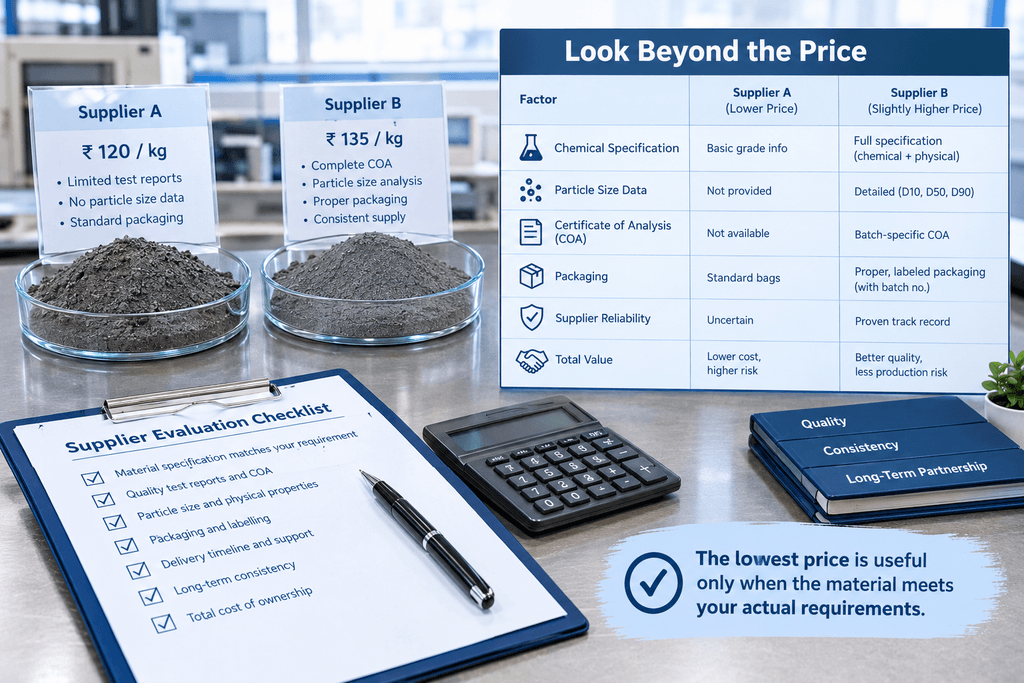
Price matters in every foundry.
Raw material costs directly affect production expenses, especially when materials are purchased regularly.
But comparing only the price per kilogram can sometimes give an incomplete picture.
Suppose Supplier A offers a lower price but provides limited information about particle size and batch testing.
Supplier B quotes a slightly higher price but supplies the agreed chemical specification, particle size analysis, and proper batch documentation.
The cheaper quotation may still be suitable, but the buyer needs enough information to make a fair comparison.
If material quality varies, the foundry may face additional testing, handling adjustments, or production delays.
These costs are not always visible in the initial quotation.
A better approach is to compare suppliers based on the total purchasing requirement.
That includes material specifications, testing documents, packaging, delivery arrangements, and consistency.
The lowest price is useful only when the material meets the foundry’s actual requirements.
12. Test a Small Quantity Before Placing a Bulk Order
For a new supplier or a new powder grade, a trial can be a practical step.
Laboratory reports provide useful information, but actual production conditions may reveal additional details.
A foundry can start by checking the material’s appearance, particle size, and handling behavior.
Where appropriate, the powder can then be evaluated in the intended process under controlled conditions.
During the trial, the team can observe whether the material feeds properly, mixes as expected, and meets the relevant process requirements.
The trial should use measurable acceptance criteria rather than relying only on visual impressions.
For example, the foundry may compare the trial material with its existing approved powder.
This can help determine whether the new product is suitable for regular purchasing.
A successful trial also provides a useful reference when evaluating future batches.
13. Keep the Purchase Specification Clear
A common purchasing problem is that the buyer and supplier may have different understandings of the same product name.
For example, an enquiry for “Atomized Ferro Silicon Powder 45%” does not fully explain the material requirement.
The supplier still needs to know the acceptable silicon range, particle size, impurity limits, packing requirements, and intended application.
Without these details, two suppliers may quote different materials under similar product names.
A clear specification helps avoid this confusion.
Simple Buying Checklist for Foundries
| What to Check | Why It Matters |
| Silicon percentage | Confirms the required chemical grade |
| Impurity limits | Helps maintain the required material chemistry |
| Particle size | Influences handling and process suitability |
| Particle shape | Can affect flow and mixing behavior |
| Moisture condition | Helps prevent clumping and handling problems |
| Flowability | Important for powder feeding systems |
| Apparent density | Useful for handling and dosing equipment |
| Certificate of Analysis | Provides chemical testing information |
| Batch identification | Supports traceability |
| Packaging | Protects the powder during transport and storage |
| Supplier consistency | Helps maintain repeatable production |
| Trial performance | Confirms suitability for the intended process |
Buyers do not necessarily need every test for every application.
The important thing is to identify which properties matter most to their own foundry.
Common Mistakes Foundries Should Avoid When Buying Atomized Ferro Silicon Powder
Even experienced purchasing teams can overlook small details when ordering industrial powders.
One common mistake is assuming that every powder with the same silicon percentage will perform identically.
Another is approving a sample without defining the acceptable particle size distribution for future shipments.
Some buyers also rely entirely on a supplier’s standard product description instead of sharing their own technical requirements.
A further mistake is failing to connect material purchasing with actual production feedback.
For example, if operators notice changes in powder feeding, the purchasing and quality teams should investigate whether the material properties have changed.
These observations can help improve future purchasing decisions.
The aim is not to make the buying process unnecessarily complicated.
It is simply to make sure the foundry receives the right material and can use it consistently.
Why Supplier Communication Matters
Good communication between the foundry and the supplier can prevent many avoidable problems.
A supplier needs to understand more than the required quantity.
Information about the intended application, required chemistry, particle size, and handling method can help clarify which product is suitable.
It is also useful to discuss documentation requirements before dispatch.
If the buyer needs a batch-specific COA or particle size report, this should be confirmed when placing the order.
The same applies to packaging, delivery schedules, and any special inspection requirements.
Clear communication may seem basic, but it can make repeat purchasing much smoother.
Final Thoughts
Atomized Ferro Silicon Powder may look like a simple industrial material, but choosing the right grade requires more than checking the silicon percentage.
For foundries, the actual value of the powder depends on how well it matches the intended process.
Chemical composition is important, but particle size, moisture, flowability, batch consistency, and packaging also deserve attention.
A powder that works well in one application may not be the best choice for another.
That is why buyers should start with their own production requirements and then compare available materials against those requirements.
Taking a little more time to check the technical details before purchasing can help avoid unnecessary problems after the material reaches the foundry.
Looking for Reliable Ferroalloy Materials? Contact Dsalloyd Pvt Ltd
Industrial manufacturers need raw materials that match their production requirements. Whether it is a foundry, steel plant, or alloy manufacturing unit, choosing the right material is an important part of maintaining consistent operations.
Dsalloyd Pvt Ltd supplies metallurgical materials, including Manganese Metal Flakes and Noble Alloys, for industrial applications.
The company serves businesses looking for alloy materials used in steelmaking and other metallurgical processes.
If you are sourcing ferroalloy products, it is important to discuss the required grade, chemical composition, quantity, and delivery requirements before placing an order.
For enquiries related to Atomized Ferro Silicon Powder or other alloy materials, you can contact the Dsalloyd team to discuss product specifications and availability.
Connect with Dsalloyd Pvt Ltd for your industrial alloy requirements.
Visit: Dsalloyd Pvt Ltd – Official Website
Frequently Asked Questions (FAQs)
Atomized Ferro Silicon Powder can be used in selected metallurgical and foundry-related applications where controlled silicon content and fine powder characteristics are required. Its suitability depends on the specific process. Some foundries may use other forms of ferro silicon for melting, alloy adjustment, or inoculation.
Buyers should check silicon content, chemical impurities, particle size distribution, moisture condition, powder flowability, packaging, and quality testing documents. They should also confirm whether the material is suitable for their intended application.
The main difference is the silicon content. A 45% grade contains approximately 45% silicon, while a 15% grade contains approximately 15% silicon. Their physical specifications and intended applications may also differ. Buyers should not treat these grades as interchangeable.
Particle size affects how the powder flows, mixes, and behaves during handling or processing. A suitable particle size distribution can help maintain consistent feeding and performance in applications where these properties matter.
Not necessarily. Atomized and crushed powders have different particle characteristics. Atomized powder may offer advantages in certain applications requiring controlled flow or particle shape, while crushed material may be suitable for other processes. The correct choice depends on the application.
Yes. Excessive moisture may cause clumping and affect powder handling. Moisture can also create safety concerns in high-temperature operations. Buyers should confirm the required moisture limits and ensure the powder is stored appropriately.
A Certificate of Analysis helps buyers verify the tested chemical composition of the material. A batch-specific COA also supports traceability and makes it easier to compare different shipments.
No. Different foundry processes may require different chemical grades, particle sizes, and physical properties. The powder should be selected according to the intended application rather than its product name alone.
Foundries can compare batch-specific COAs, particle size reports, and inspection records across shipments. They can also evaluate how consistently the material performs during regular production.
Industrial buyers can contact Dsalloyd Pvt Ltd for enquiries about Manganese Metal Flakes, Noble Alloys, and other metallurgical material requirements. Buyers should confirm the availability and technical specifications of any particular product before ordering.
