

Ferro Titanium Producers
Steel is one of the most important materials used in the modern world. From buildings and bridges to vehicles, machines, pipelines, and industrial equipment, steel is everywhere.
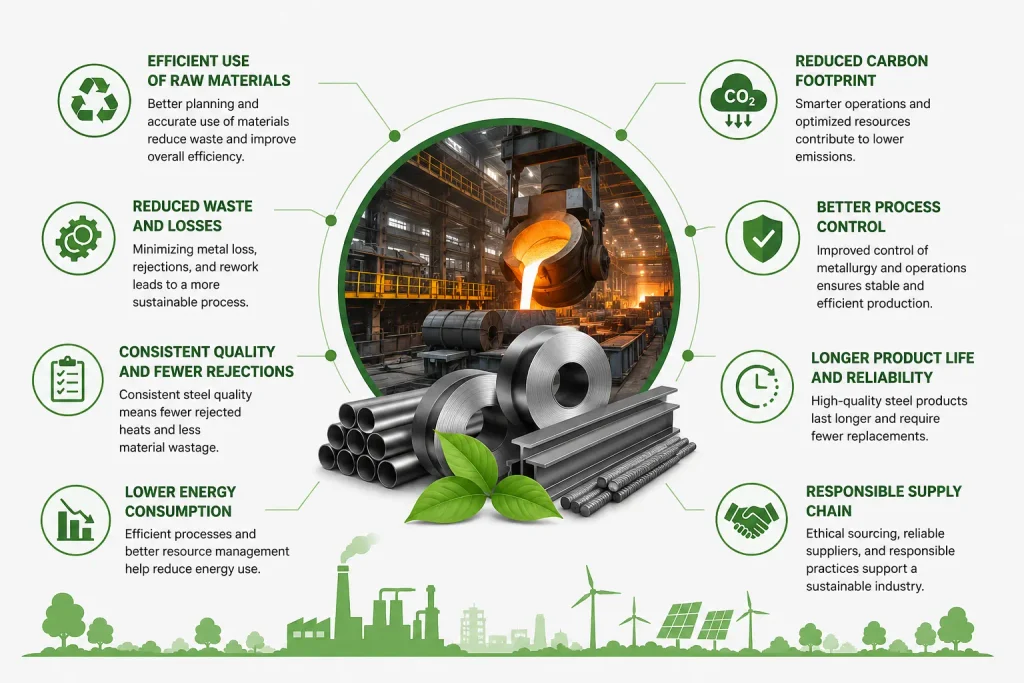
At the same time, the steel industry is under increasing pressure to improve efficiency and reduce unnecessary waste. Sustainable steel manufacturing is no longer only about using less energy. It also involves better use of raw materials, improved process control, longer product life, and reducing the amount of material that is lost during production.
This is where alloy producers and suppliers can make a difference.
Ferro titanium is used in steelmaking in relatively controlled quantities, but its effect on the production process can be significant. A good ferro titanium producer does more than simply supply an alloy. The quality, composition, sizing, consistency, and reliability of the material can all influence how efficiently a steel plant uses its resources.
So, how do ferro titanium producers support more sustainable steel manufacturing? Let’s understand it in a simple way.
Sustainable Steel Manufacturing Is About More Than Carbon Emissions
When people hear the word “sustainable,” they often think only about carbon emissions.
But inside a steel plant, sustainability is also connected with many practical things.
For example:
- How efficiently raw materials are used
- How much metal is lost during production
- How many rejected heats or defective products are produced
- How much rework is required
- How consistently steel quality is maintained
- How efficiently alloying materials are used
- How long the final steel product performs in service
In simple words, producing the right steel correctly the first time is generally better than producing inconsistent steel and then spending additional time, energy, and materials correcting the problem.
This is one of the areas where reliable ferro titanium production can support better manufacturing practices.
What Is Ferro Titanium?
Ferro titanium is an alloy of iron and titanium. It is used in steelmaking and other metallurgical applications to introduce titanium into the melt.
Titanium has a strong affinity for certain elements present in molten steel, particularly oxygen and nitrogen. Because of this, ferro titanium can be used for metallurgical purposes such as:
- Deoxidation
- Nitrogen control
- Grain refinement
- Improving steel cleanliness
- Supporting specific mechanical properties
- Stabilizing certain steel compositions
The exact role of ferro titanium depends on the grade of steel and the manufacturing process.
What is important is that the material needs to behave predictably. If the composition or quality of an alloy changes from one batch to another, the steelmaker may need to make adjustments during production. That can affect material consumption and process efficiency.
1. Better Raw Material Control Can Help Reduce Waste
One of the less discussed aspects of sustainable steel production is raw material efficiency.
Steelmaking involves a large number of inputs. If one important alloying material varies significantly in chemistry or contains unwanted impurities, the plant may need to compensate with additional materials.
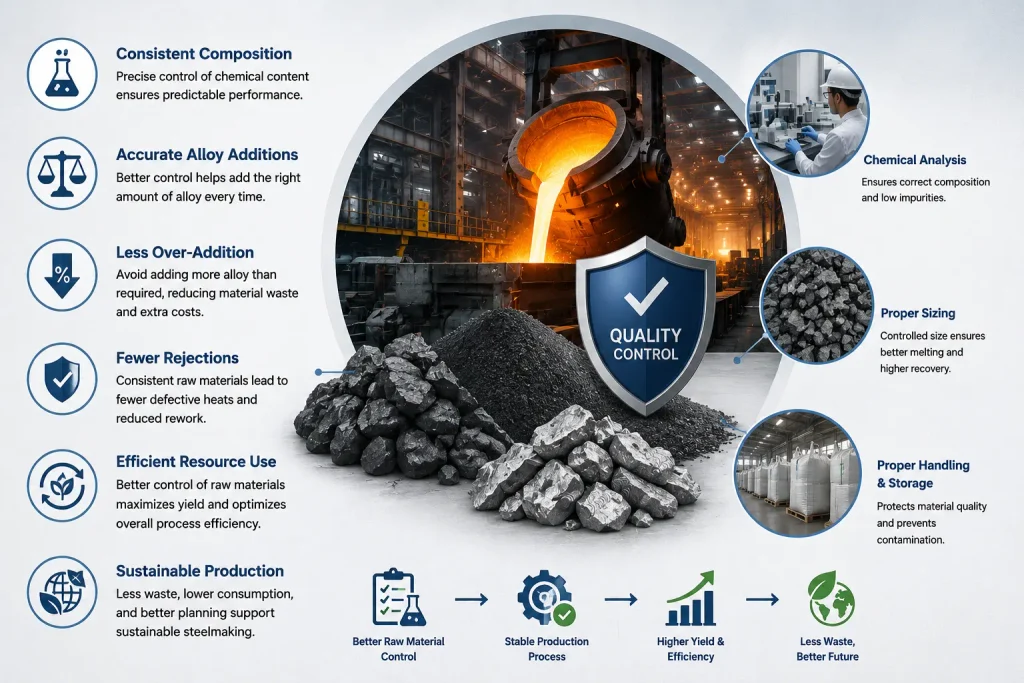
A consistent ferro titanium producer focuses on controlling factors such as:
- Titanium content
- Iron content
- Impurity levels
- Product sizing
- Batch consistency
This gives the steelmaker better control over alloy additions.
For example, if the titanium content of the supplied material is predictable, the production team can calculate additions with greater confidence. This can help avoid unnecessary over-addition.
Using more alloy than required does not automatically mean better steel. In many cases, accurate addition is more important than excessive addition.
Better control can support lower material waste over time.
2. Consistent Ferro Titanium Can Support Higher Recovery
Every steel plant wants alloy additions to perform as efficiently as possible.
However, alloy recovery can be influenced by several factors, including:
- The condition of the molten steel
- Temperature
- Addition method
- Timing of addition
- Alloy composition
- Particle or lump size
- Oxidation and handling conditions
A ferro titanium producer cannot control everything happening inside the steel plant. But they can help by supplying material with consistent physical and chemical characteristics.
When the material behaves more predictably, it becomes easier for the steelmaking team to establish stable operating practices.
Over a large number of heats, small improvements in alloy control can become meaningful. A reduction in unnecessary alloy consumption can support both cost efficiency and better resource utilization.
That is an important part of sustainability.
3. Reducing Rework Is Also a Form of Sustainable Manufacturing
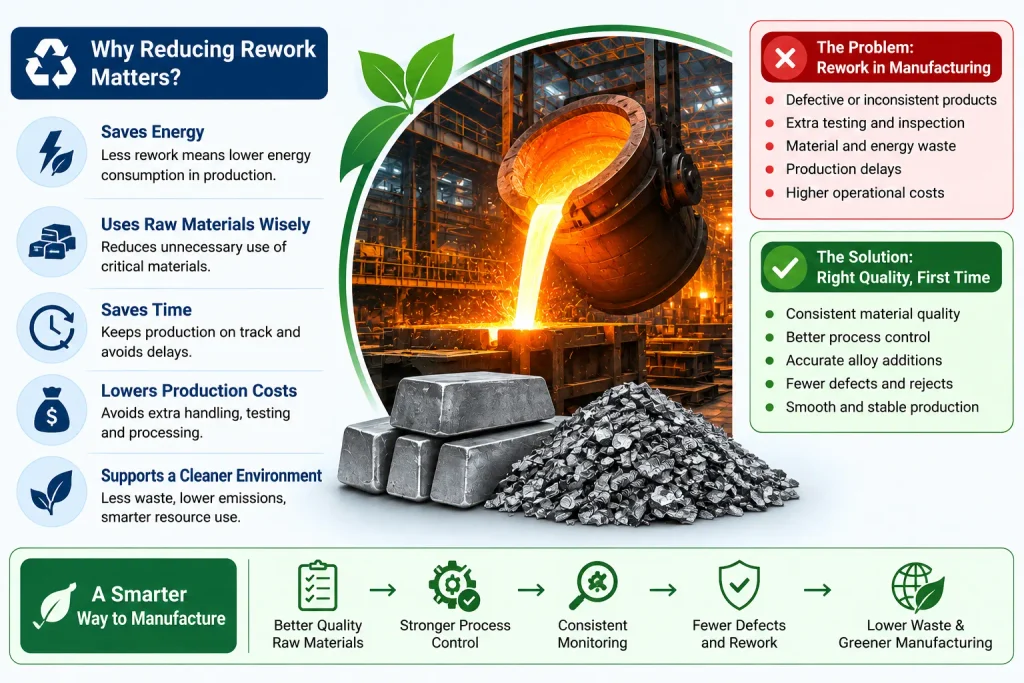
A product that needs to be remelted, repaired, or rejected consumes additional resources.
Think about the process behind one rejected batch of steel. More energy may be required. More raw materials may be needed. Production time is also lost.
This is why quality consistency matters.
Ferro titanium producers support sustainable manufacturing when they help steelmakers maintain better control over the metallurgical process.
A reliable producer should pay attention to more than simply producing a material that meets a basic specification. Batch-to-batch consistency also matters.
The goal is simple: give the steel manufacturer a material they can understand, measure, and use consistently.
This can support smoother production and reduce the risk of avoidable process variation.
4. Quality Control at the Producer Level Matters More Than It May Seem
Sustainability does not begin only when the alloy reaches the steel plant.
It also begins during the production and preparation of the ferro alloy itself.
A responsible producer needs to consider:
- Raw material selection
- Processing control
- Material segregation
- Chemical analysis
- Size control
- Proper handling
- Packaging
- Storage
- Reduction of unnecessary processing losses
Poor handling can result in contamination or oxidation. Inconsistent sizing can affect handling and addition practices. Weak quality checks can allow variation to reach the customer.
On the other hand, proper quality control helps make the supply chain more reliable.
This is one reason why steel manufacturers often look beyond price when selecting a ferro alloy producer.
The lowest-cost material may not always provide the best overall value if it creates inconsistency during production.
5. Ferro Titanium Producers Can Support the Efficient Use of Titanium Resources
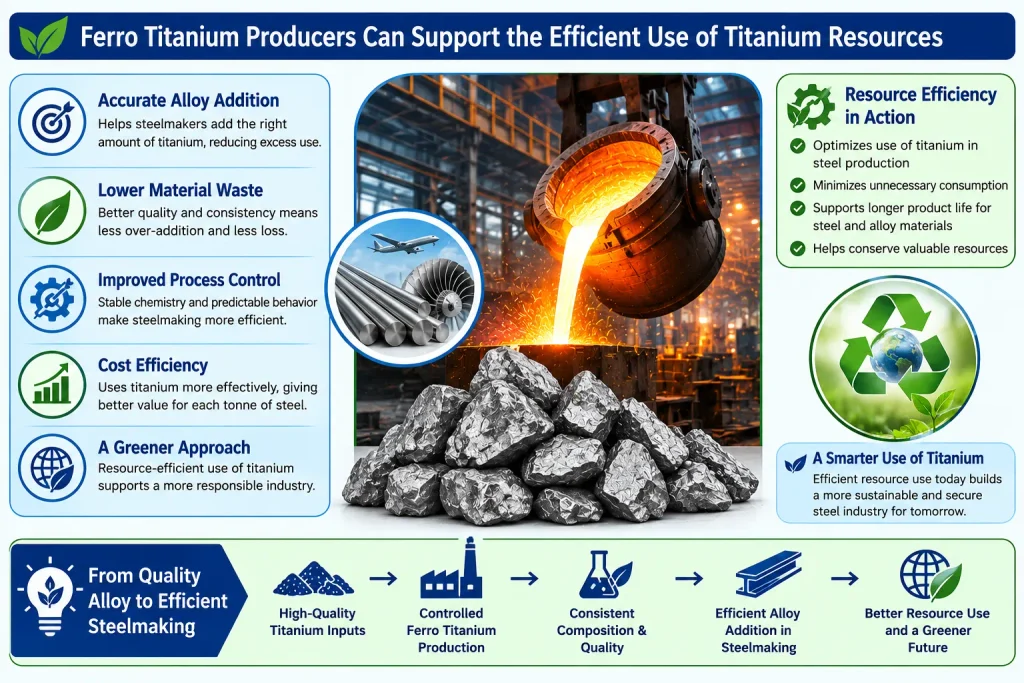
Titanium is a valuable alloying element. Using it efficiently is important.
A sustainable approach is not simply about using less material in every situation. It is about using the right amount of material for the required metallurgical purpose.
A well-controlled ferro titanium product can help manufacturers improve addition accuracy.
This becomes particularly important in steelmaking because alloying decisions are often based on precise chemical targets.
If a producer provides clear and consistent material information, steel plants can better plan their alloy additions.
That can help reduce:
- Unnecessary over-alloying
- Excessive consumption
- Process corrections
- Material losses
The benefit may appear small in a single heat, but steel plants operate continuously and process large volumes of material. Small improvements repeated over time can create meaningful results.
6. The Use of Suitable Raw Materials Can Support Resource Efficiency
Another important area is the use of raw materials.
Depending on the production method, ferro titanium can be produced using different titanium-bearing inputs, including suitable titanium scrap and other approved raw materials.
The responsible use of secondary materials can support a more circular approach to industrial manufacturing.
Of course, not every type of scrap is suitable for every application. The material must be properly evaluated and controlled.
The main point is that a good producer should understand the quality of the input material rather than treating all raw materials as the same.
Proper sorting and processing can help recover value from suitable materials while maintaining the required quality of the final ferro alloy.
This is a practical example of how metallurgical production and resource efficiency can work together.
7. Better Steel Quality Can Support a Longer Product Life
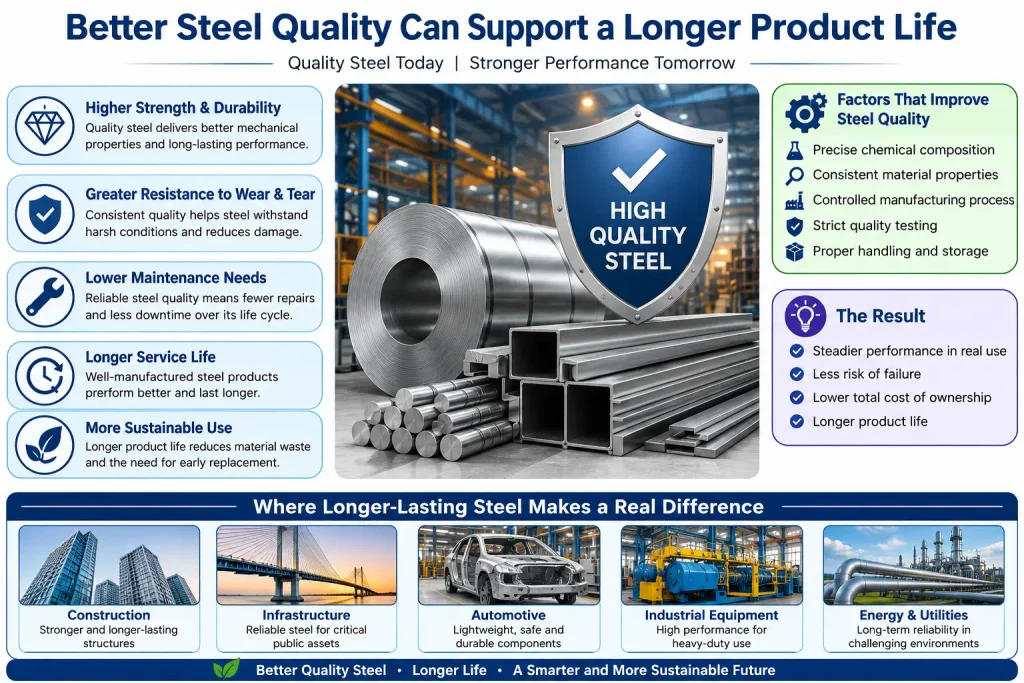
Sustainability is not only about what happens inside the steel plant.
It is also connected with the performance of the finished steel.
When steel is produced with the required mechanical and metallurgical properties, it can perform more reliably in its intended application.
Depending on the steel grade and application, good metallurgical control may support properties such as:
- Strength
- Toughness
- Weldability
- Structural consistency
- Resistance to certain forms of degradation
A longer-performing product can reduce the need for early replacement.
This is why alloy quality should be viewed as part of the larger manufacturing chain.
The contribution of ferro titanium may be relatively small compared with the total quantity of steel produced, but small metallurgical additions can have an important effect on the final properties of specialized steels.
8. Reliable Supply Can Reduce Operational Waste
Sustainability also has a supply-chain side.
Imagine a steel plant receiving material inconsistently or facing frequent supply disruptions. Production planning becomes more difficult. Emergency purchases may be required. Alternative materials may need to be tested.
Reliable supply helps manufacturers plan more effectively.
A dependable ferro titanium producer should focus on:
- Consistent supply planning
- Proper packaging
- Material availability
- Clear documentation
- Batch traceability where required
- Communication with customers
A more stable supply chain can help reduce unnecessary operational disruptions.
In industrial manufacturing, efficiency is not only created inside the furnace. It is also created through better planning before the material reaches the furnace.
9. Sustainable Steel Manufacturing Needs Better Collaboration
Steelmaking is a complex process.
The producer of a ferro alloy and the steel manufacturer may operate in different parts of the supply chain, but their work is connected.
When alloy suppliers understand the practical requirements of steelmakers, they can provide better support.
For example, customers may require specific:
- Chemical compositions
- Material sizes
- Packaging formats
- Delivery schedules
- Documentation
Meeting these requirements properly can help the customer handle and use the material more efficiently.
This is why long-term supplier relationships can be valuable.
A good supplier does not only focus on the current order. They also try to understand what the customer needs for stable production.
The Future of Sustainable Steel Will Depend on Better Metallurgical Control
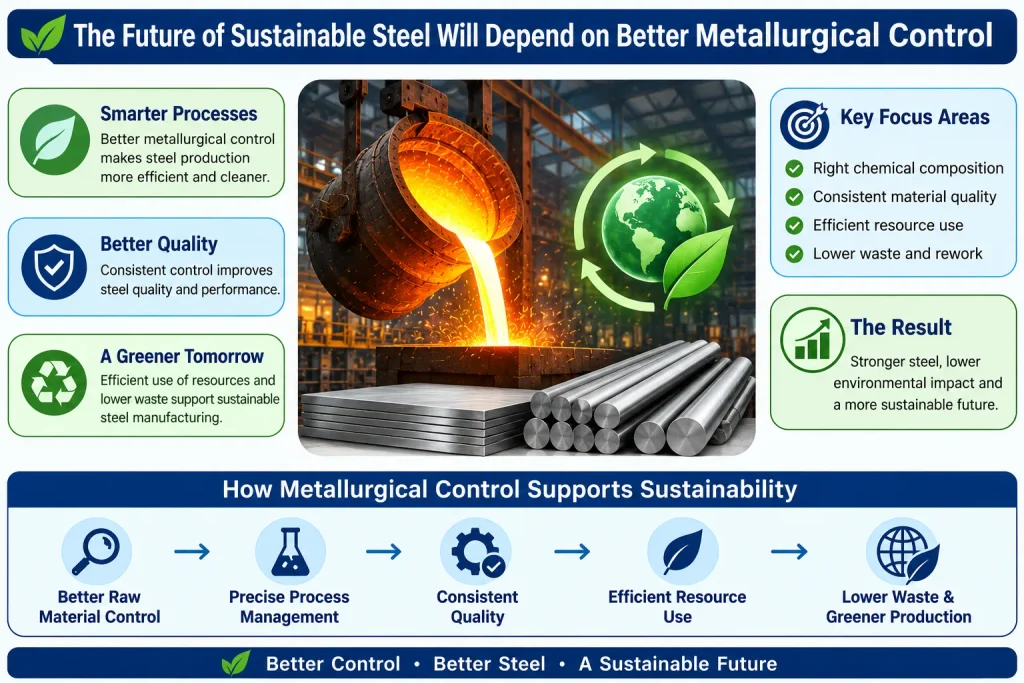
The future of steel manufacturing will involve many changes.
Steel producers are working toward greater efficiency, better use of recycled materials, improved energy management, and more controlled production processes.
Alloy producers also have a role to play.
The future may place even greater importance on:
- Consistent alloy quality
- Efficient use of raw materials
- Reduced material losses
- Better process control
- Improved traceability
- Responsible sourcing
- Reliable supply chains
Ferro titanium producers who focus on these areas can become valuable partners for steel manufacturers.
Sustainability is not achieved through one material or one process. It is built through many small improvements across the entire production chain.
How DS Alloyd Pvt Ltd Supports the Steel and Alloy Industry
Steel manufacturing requires a carefully balanced combination of alloying materials. While different ferro alloys serve different metallurgical purposes, consistent raw material quality remains important throughout the process.
DS Alloyd Pvt Ltd supplies alloy materials for steel and industrial manufacturing applications, including Manganese Metal Flakes and a range of Noble Alloys. The company also highlights quality control, advanced production processes, and sustainable practices as part of its approach to serving industrial customers.
For manufacturers looking for dependable alloy materials, the right supplier can help support better process consistency and long-term production planning.
Looking for Reliable Manganese Metal Flakes or Noble Alloys?
DS Alloyd Pvt Ltd provides alloy solutions for steel plants, foundries, and industrial manufacturers.
Whether your requirement involves Manganese Metal Flakes or specialized Noble Alloys, working with a reliable supplier can help you maintain better control over your material requirements.
Visit DS Alloyd Pvt Ltd’s official website to explore the company’s product range and learn more about its alloy solutions.
Frequently Asked Questions (FAQs)
Ferro titanium is mainly used to introduce titanium into steel. Depending on the steel grade and process, it can support deoxidation, nitrogen control, grain refinement, and other metallurgical requirements.
Ferro titanium can support sustainability by helping steelmakers improve alloy control, reduce unnecessary material consumption, minimize process variation, and reduce avoidable rework.
Consistent chemistry and physical properties make it easier for steel plants to calculate and control alloy additions. This can support more stable production and better use of raw materials.
Yes. When alloy additions are predictable and properly controlled, steel manufacturers may reduce unnecessary over-addition and avoid some production corrections caused by material inconsistency.
No. Carbon reduction is important, but sustainability also includes efficient use of raw materials, reducing waste, improving process efficiency, using resources responsibly, and producing durable steel products.
The producer influences the consistency of the material supplied to the steel plant. Factors such as chemical composition, impurities, sizing, and quality control can affect how predictably the alloy performs during steelmaking.
Different steel grades require different alloying elements. Manganese and noble alloys, among other materials, can play important roles in achieving the required chemical composition and mechanical properties.
DS Alloyd Pvt Ltd supplies Manganese Metal Flakes and Noble Alloys for steel and industrial applications. You can explore the company and its product range through its official website.
Final Thoughts
Sustainable steel manufacturing is not dependent on one major change alone.
It is built through better decisions at every stage — from raw material selection and alloy production to steelmaking, quality control, and the final performance of the product.
Ferro titanium producers can contribute by supplying consistent material, supporting efficient alloy use, improving quality control, and helping steel manufacturers reduce unnecessary process variation.
The biggest lesson is quite simple: using materials more accurately and producing steel more consistently can support both operational efficiency and sustainability.
For companies involved in steel and alloy manufacturing, choosing reliable material partners is an important part of building a stronger and more efficient production process.
