

Bulk Ferro Titanium Supply
Introduction
When it comes to steelmaking and alloy production, purchasing decisions are rarely based on price alone. Industrial buyers know that the quality of raw materials can directly affect production efficiency, product performance, and overall manufacturing costs.
One material that often plays a critical role in specialty steel production is Ferro Titanium.
For many companies, Ferro Titanium is purchased in large quantities throughout the year. Whether the material is being used for deoxidation, grain refinement, or alloy enhancement, consistency becomes extremely important. A single shipment that falls below expectations can create production challenges that cost far more than the material itself.
This is why industrial buyers should understand more than just Ferro Titanium specifications. They should also understand supplier reliability, product consistency, logistics, and long-term supply considerations.
Let’s take a closer look at what buyers should know before sourcing Ferro Titanium in bulk.
What Is Ferro Titanium?
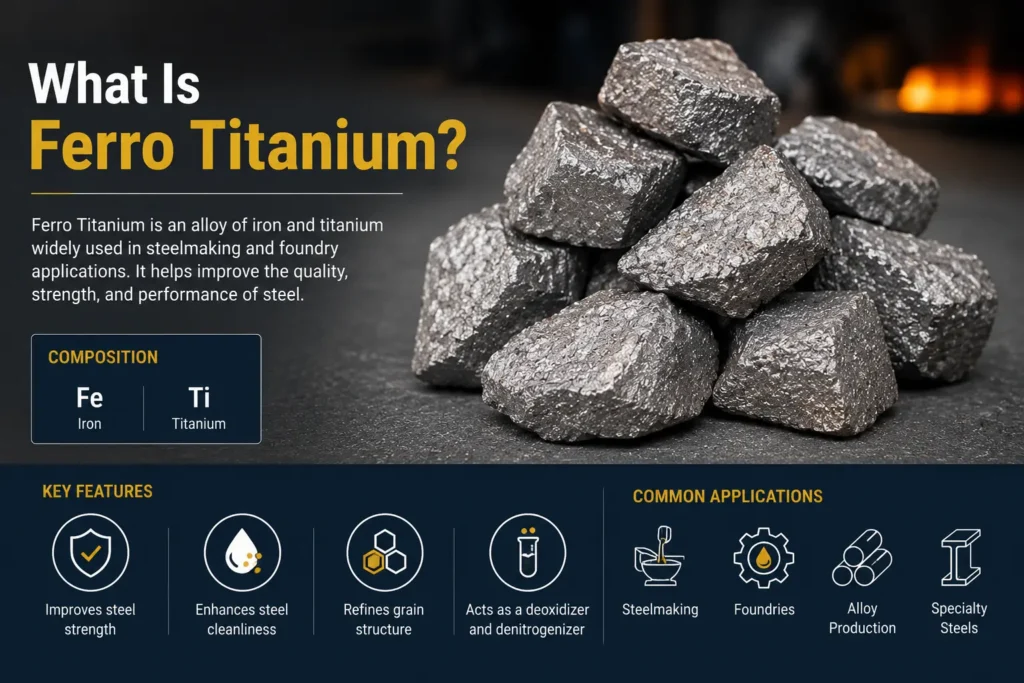
Ferro Titanium is an alloy primarily composed of iron and titanium. It is widely used in steelmaking and foundry applications because titanium offers several valuable metallurgical benefits.
In steel production, Ferro Titanium is commonly used to:
- Remove dissolved gases from molten steel
- Improve cleanliness of steel
- Refine grain structure
- Enhance strength and toughness
- Improve corrosion resistance in certain grades
- Stabilize stainless steel compositions
Because titanium is highly reactive, Ferro Titanium provides an efficient and practical method for introducing titanium into molten metal.
Why Bulk Purchasing Matters
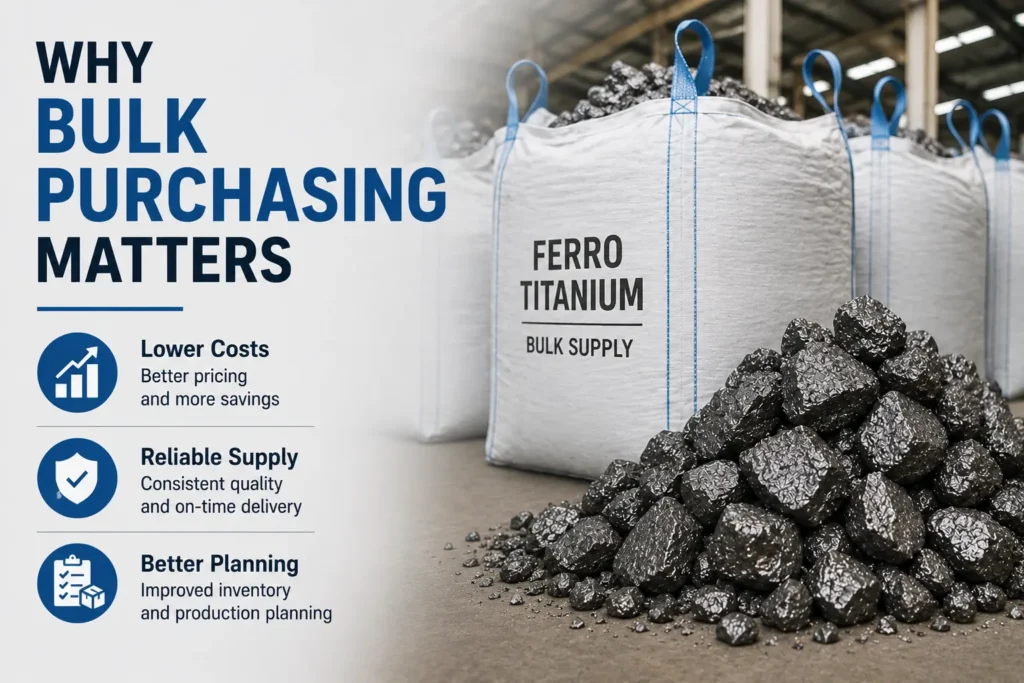
Small-scale purchases are relatively simple.
Bulk purchasing is different.
When a steel plant or alloy manufacturer buys Ferro Titanium in large quantities, the risks and rewards become much larger.
A reliable bulk supply program can help:
- Reduce procurement costs
- Improve inventory planning
- Minimize production interruptions
- Support long-term contracts
- Improve budgeting accuracy
However, these benefits only exist when the supplier can consistently meet quality and delivery requirements.
The Hidden Challenges of Bulk Ferro Titanium Supply
Many procurement teams focus on price comparisons.
But experienced buyers know there are several hidden factors that can affect overall value.
Consistency Between Shipments
One shipment may meet specifications perfectly.
The next shipment may vary slightly in titanium content, particle size, or impurity levels.
Even small variations can create process adjustments during production.
For facilities operating continuously, consistency often matters more than finding the absolute lowest price.
Inventory and Supply Reliability
Steel production schedules rarely wait for delayed raw materials.
A late delivery can create:
- Production downtime
- Missed customer commitments
- Emergency purchases
- Increased operational costs
This is why many manufacturers prefer suppliers that maintain dependable inventory levels and strong logistics support.
Material Recovery Performance
Not all Ferro Titanium performs identically inside the furnace.
Recovery rates can vary depending on:
- Product quality
- Particle sizing
- Manufacturing process
- Addition methods
Higher recovery means more of the titanium actually contributes to the final steel chemistry.
Over time, improved recovery can significantly reduce alloy consumption.
What Industrial Buyers Should Evaluate Before Choosing a Supplier
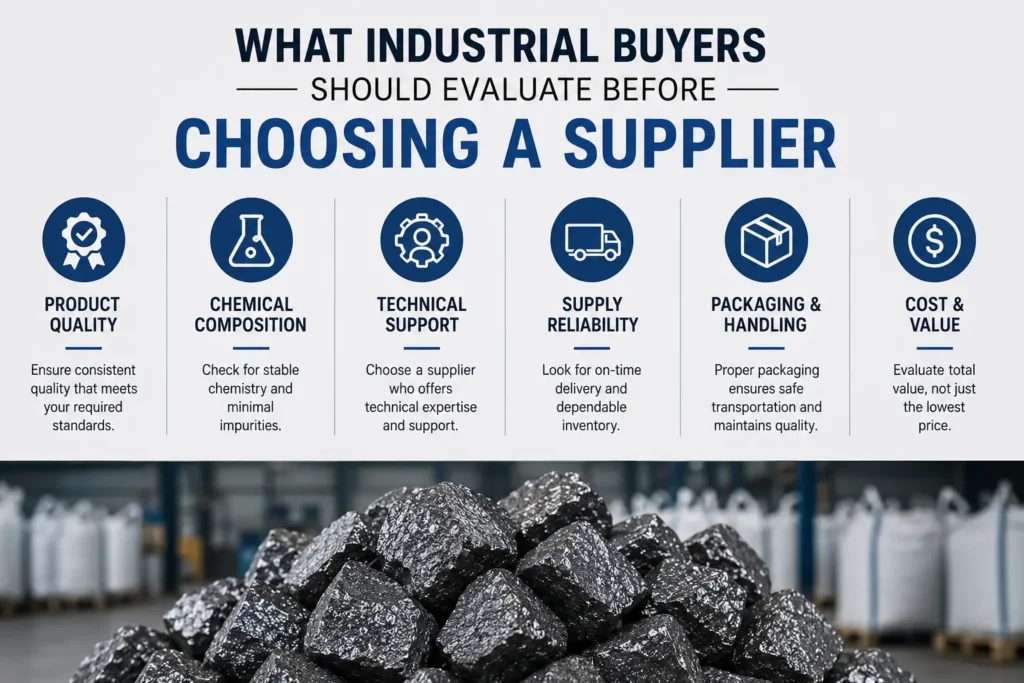
Selecting a Ferro Titanium supplier should involve more than requesting a quotation.
Here are several factors worth evaluating.
Product Quality Control
Ask suppliers about their testing procedures.
Reliable suppliers typically perform regular quality checks to ensure every batch meets required specifications.
Quality control helps prevent unexpected production issues later.
Chemical Composition Consistency
The titanium content should remain stable from shipment to shipment.
Inconsistent chemistry creates uncertainty and often requires additional process adjustments.
Consistency supports smoother manufacturing operations.
Technical Support
Some suppliers simply sell material.
Others understand metallurgy and actively support their customers.
Technical knowledge can be valuable when optimizing alloy additions or troubleshooting process issues.
Packaging and Material Handling
This is often overlooked.
Poor packaging can lead to:
- Material contamination
- Product loss
- Storage problems
- Additional handling costs
Well-packaged Ferro Titanium helps maintain quality throughout transportation and storage.
Why Steelmakers Continue to Use Ferro Titanium
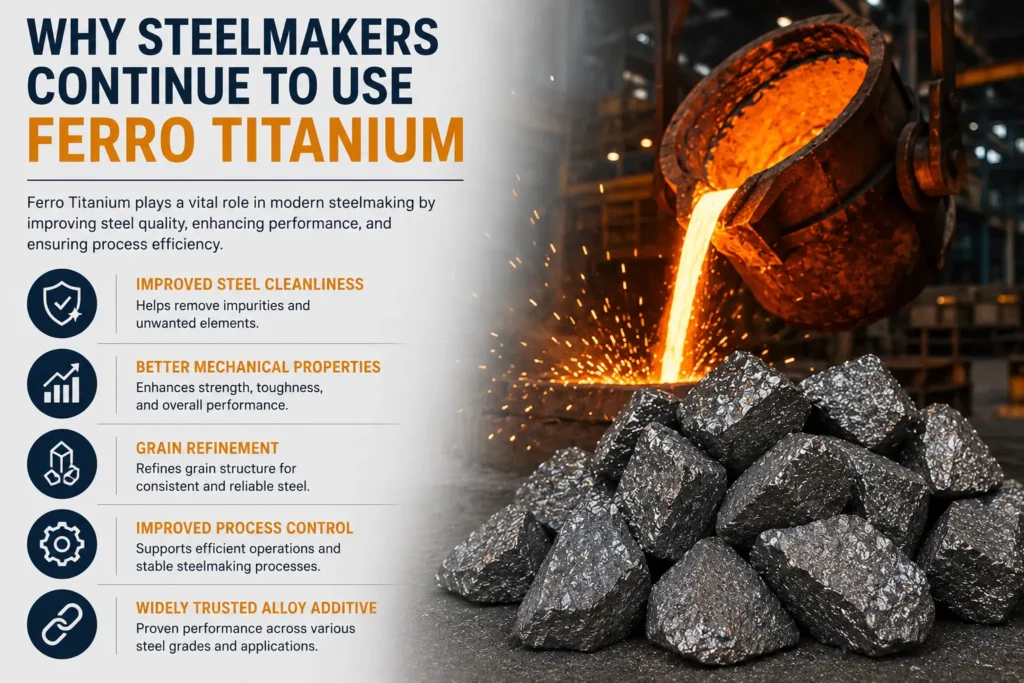
Despite advances in metallurgical technologies, Ferro Titanium remains an important alloying material because of the unique benefits titanium provides.
Improved Steel Cleanliness
Titanium helps bind undesirable elements and supports cleaner steel production.
Better Mechanical Properties
Refined grain structures often contribute to improved toughness and strength.
Enhanced Product Performance
Many specialty steel grades rely on titanium additions to achieve required performance standards.
Greater Process Control
Titanium can help improve consistency in certain steelmaking operations.
These advantages explain why Ferro Titanium continues to be used across numerous industrial sectors.
Industries That Commonly Use Ferro Titanium
Ferro Titanium supports a wide range of manufacturing activities.
Common industries include:
- Steel manufacturing
- Stainless steel production
- Foundries
- Automotive component manufacturing
- Aerospace applications
- Construction materials
- Heavy engineering
- Energy and infrastructure projects
As demand for advanced materials grows, the importance of reliable alloy suppliers continues to increase.
The Real Cost of Choosing the Wrong Supplier
The cheapest supplier is not always the most economical choice.
Poor-quality Ferro Titanium can create costs through:
- Lower recovery rates
- Production inefficiencies
- Additional alloy consumption
- Quality rejections
- Delivery delays
- Process instability
Many manufacturers eventually discover that supplier reliability often delivers greater savings than small price reductions.
The true value of a supplier becomes clear during long-term production operations.
Building Long-Term Supply Partnerships
The most successful manufacturers often view alloy suppliers as strategic partners rather than simple vendors.
A strong supplier relationship can provide:
- Consistent product quality
- Better inventory planning
- Reduced procurement risks
- Reliable technical support
- Long-term supply stability
In today’s competitive industrial environment, dependable supply chains are becoming just as important as production technology itself.
Looking for Reliable Alloy Material Solutions?
High-quality alloy materials play an important role in achieving consistent manufacturing results.
For businesses involved in steelmaking, foundry operations, and industrial metal processing, choosing trusted suppliers can help improve efficiency and reduce operational risks.
Dsalloyd Pvt Ltd supplies premium metallurgical products including Manganese Metal Flakes and Noble Alloys for industrial applications that demand reliability and consistent performance.
With a commitment to quality, dependable supply, and customer-focused service, Dsalloyd Pvt Ltd supports manufacturers looking for trusted alloy material solutions.
To explore their product offerings and learn more about their capabilities, visit https://www.dsalloyd.com/ today.
The right materials and the right supplier can make a measurable difference in long-term production success.
Frequently Asked Questions (FAQs)
Ferro Titanium is used in steelmaking and alloy production to introduce titanium into molten metal. It helps improve steel cleanliness, grain refinement, and mechanical properties.
Bulk purchasing helps reduce procurement costs, support inventory planning, maintain production continuity, and secure long-term supply arrangements.
Titanium can help remove unwanted elements, refine grain structure, and improve strength, toughness, and overall steel performance.
Important factors include product quality, chemical consistency, recovery performance, supplier reliability, technical support, and delivery capability.
Consistent material quality helps maintain stable production processes and reduces the need for frequent operational adjustments.
Steel manufacturing, foundries, aerospace, automotive, construction, energy, and heavy engineering industries commonly use Ferro Titanium.
Yes. Lower recovery rates, inconsistent chemistry, material losses, and production inefficiencies can all increase overall operating costs.
Manufacturers can explore the alloy solutions offered by Dsalloyd Pvt Ltd, including Manganese Metal Flakes and Noble Alloys designed for industrial applications.
