

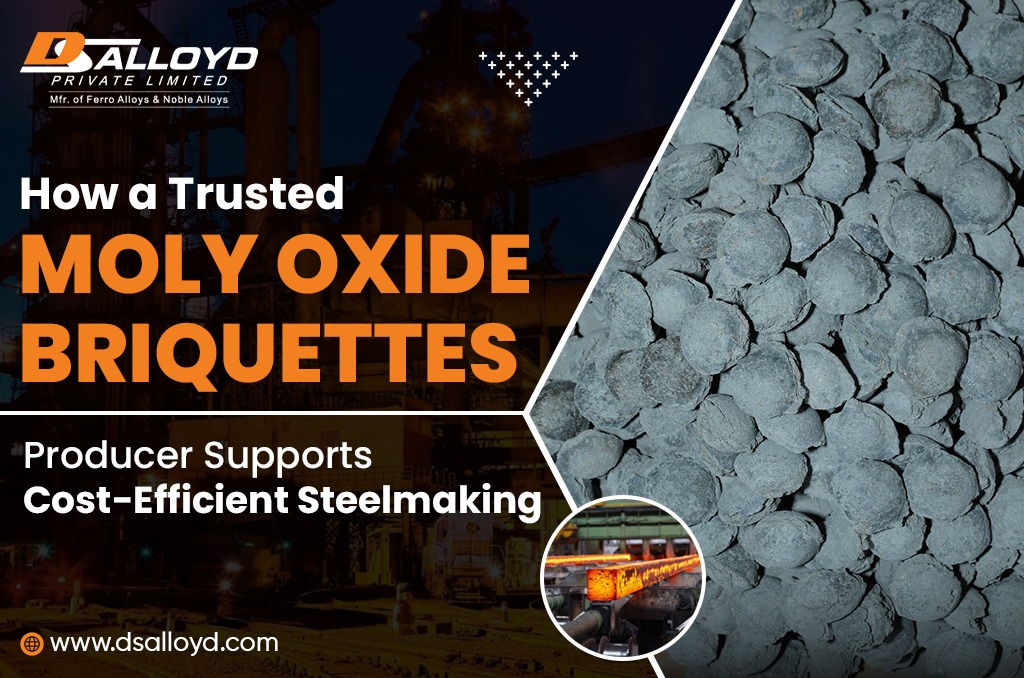
Trusted Moly Oxide Briquettes Producer
Introduction
In steel manufacturing, every percentage point matters.
A small improvement in alloy recovery, a slight reduction in material waste, or a more consistent production process can lead to significant savings over time. This is one reason why steel producers pay close attention not only to the alloys they use but also to the form in which those alloys are supplied.
One material that plays an important role in modern steelmaking is Moly Oxide Briquettes.
While molybdenum itself is well known for improving steel strength and high-temperature performance, the way molybdenum is introduced into the steelmaking process can greatly affect efficiency. Moly Oxide Briquettes have become a preferred option for many manufacturers because they offer easier handling, controlled addition, and improved process consistency.
However, the benefits of these briquettes depend heavily on the producer behind them.
A trusted Moly Oxide Briquettes producer does more than supply material. They help steelmakers improve operational efficiency, reduce losses, and maintain consistent product quality.
Understanding Moly Oxide Briquettes
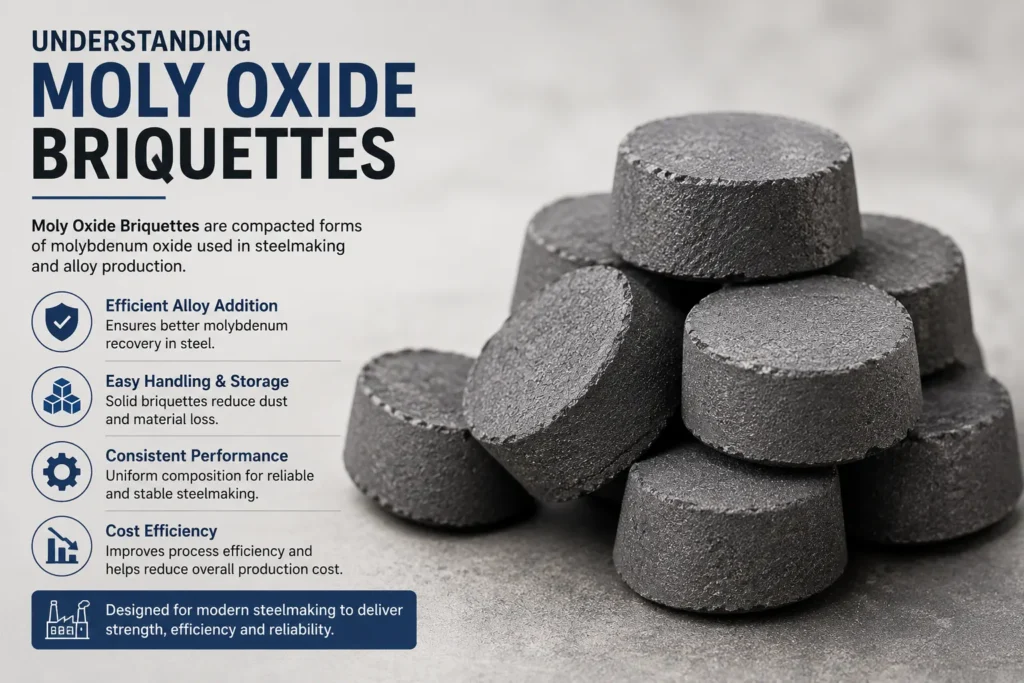
Moly Oxide Briquettes are compacted forms of molybdenum oxide designed for use in steel and alloy production.
Instead of handling fine powders, manufacturers use briquettes that are easier to store, transport, and add to the melting process.
These briquettes are engineered to provide:
- Better material handling
- Reduced dust generation
- Improved safety during processing
- More controlled alloy additions
- Consistent molybdenum content
For steelmakers, these advantages can translate directly into operational benefits.
Why Molybdenum Is Important in Steel Production
Molybdenum is one of the most valuable alloying elements used in modern metallurgy.
Its addition can significantly improve:
Strength
Molybdenum helps steel maintain strength under demanding mechanical loads.
Heat Resistance
Many industrial applications expose steel components to extreme temperatures. Molybdenum helps maintain structural stability in these conditions.
Corrosion Resistance
Molybdenum-containing steels often perform better in harsh environments where moisture, chemicals, or salt exposure may be present.
Wear Resistance
Steel used in mining equipment, industrial machinery, and heavy engineering benefits from improved wear performance.
These characteristics explain why molybdenum is widely used across industries such as:
- Oil and gas
- Power generation
- Automotive manufacturing
- Aerospace
- Construction
- Mining
- Industrial equipment production
The Link Between Briquette Quality and Steelmaking Costs
Many buyers evaluate materials based solely on purchase price.
But experienced steelmakers understand that actual production costs involve much more than the price printed on an invoice.
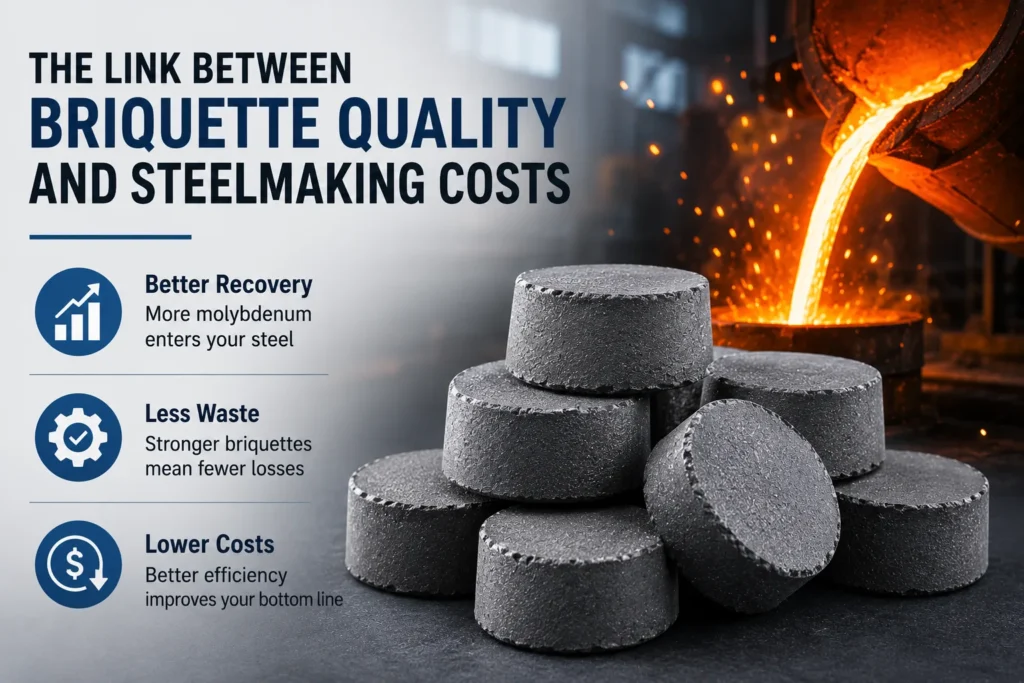
The quality of Moly Oxide Briquettes can influence several cost-related factors.
Material Recovery Rates
One of the biggest concerns during alloy addition is recovery efficiency.
If a significant portion of molybdenum fails to enter the final steel chemistry, manufacturers may need additional material to achieve target specifications.
High-quality briquettes are designed to support more predictable recovery rates, helping reduce unnecessary alloy consumption.
Reduced Material Waste
Fine powders can sometimes create handling losses during transportation, storage, and charging operations.
Briquetted materials help minimize these losses by providing a more stable and manageable form.
Even small reductions in waste can create meaningful savings over large production volumes.
Improved Furnace Efficiency
Consistent briquette quality helps create more predictable melting and alloying behavior.
This can support smoother furnace operations and reduce process variability.
For steelmakers producing thousands of tons annually, process consistency has real financial value.
Why Producer Reliability Matters
The quality of the product is only part of the equation.
The reliability of the producer often determines whether steelmakers can maintain efficient production schedules.
Consistent Product Specifications
A trusted producer follows strict quality controls to ensure every shipment meets the same specifications.
Consistency reduces uncertainty and simplifies process planning.
Stable Supply Chain Support
Unexpected supply disruptions can create production delays that are far more expensive than material costs.
Reliable producers understand the importance of inventory management and timely deliveries.
Technical Knowledge
Experienced producers often provide valuable guidance regarding:
- Material selection
- Alloy addition practices
- Product handling
- Process optimization
This expertise can help customers improve efficiency beyond the material itself.
One Hidden Advantage Many Buyers Overlook
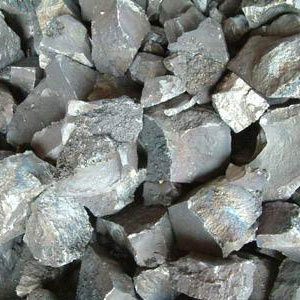
Most discussions about alloy materials focus on chemistry.
However, packaging and physical consistency can also impact operational efficiency.
Poorly manufactured briquettes may break during transportation or handling.
When this happens, manufacturers can face:
- Increased dust formation
- Material segregation
- Handling difficulties
- Additional cleanup requirements
Well-manufactured briquettes maintain their integrity throughout the supply chain, helping improve workplace efficiency and reducing avoidable losses.
This may seem like a small detail, but over time it contributes to overall cost savings.
How Steel Plants Measure Real Value
The lowest-priced supplier is not always the most economical supplier.
Many steel producers evaluate value using a broader set of performance indicators, including:
- Alloy recovery rates
- Product consistency
- Material handling efficiency
- Production downtime
- Quality compliance
- Supply reliability
- Technical support
When viewed through this wider lens, trusted suppliers often provide greater long-term value than suppliers competing only on price.
The Growing Demand for Efficient Alloy Additions
Modern steelmakers face increasing pressure to improve efficiency.
Rising energy costs, stricter quality standards, and competitive global markets require manufacturers to optimize every stage of production.
As a result, demand continues to grow for alloy materials that support:
- Better process control
- Lower waste generation
- Consistent steel chemistry
- Improved productivity
Moly Oxide Briquettes align well with these objectives, making them an important material for many steel producers.
Choosing the Right Moly Oxide Briquettes Producer
When evaluating suppliers, consider factors beyond pricing.
Look for a producer that demonstrates:
Proven Quality Standards
Consistent quality testing helps ensure reliable material performance.
Industry Experience
Suppliers with strong metallurgical knowledge often provide greater value.
Supply Dependability
Reliable delivery schedules help maintain uninterrupted production.
Customer Support
Responsive communication and technical assistance can make a significant difference when challenges arise.
Building a long-term relationship with a trusted producer often creates better results than frequently switching suppliers based on short-term pricing.
Partner with Reliable Alloy Material Experts
The success of any steelmaking operation depends on the quality of its raw materials and alloy additions.
Choosing dependable suppliers helps improve consistency, reduce operational risks, and support cost-efficient production.
Dsalloyd Pvt Ltd serves industries requiring high-quality metallurgical materials and alloy solutions. The company supplies Manganese Metal Flakes and Noble Alloys to customers who prioritize reliability, quality, and long-term performance.
Whether your focus is steelmaking, foundry operations, alloy manufacturing, or industrial metal processing, Dsalloyd Pvt Ltd is committed to supporting efficient and dependable production processes.
To learn more about their products and alloy solutions, visit https://www.dsalloyd.com/ and connect with their team today.
Investing in quality materials today can help create stronger production outcomes tomorrow.
Frequently Asked Questions (FAQs)
Moly Oxide Briquettes are compacted forms of molybdenum oxide used in steelmaking and alloy production to introduce molybdenum efficiently into molten metal.
Briquettes are easier to handle, generate less dust, reduce material losses, and support more controlled alloy additions.
They can improve recovery rates, reduce waste, enhance process consistency, and simplify material handling, all of which contribute to operational savings.
Reliable suppliers provide consistent quality, stable deliveries, proper documentation, and technical support that helps maintain production efficiency.
Industries such as oil and gas, aerospace, automotive, mining, construction, power generation, and heavy engineering commonly use molybdenum-alloyed steels.
Key considerations include product quality, consistency, industry experience, quality control practices, supply reliability, and technical expertise.
In many cases, well-manufactured briquettes provide more predictable alloying behavior, which can support improved recovery rates and process efficiency.
Manufacturers looking for dependable alloy solutions can explore the product portfolio offered by Dsalloyd Pvt Ltd, including Manganese Metal Flakes and Noble Alloys.
