

Choosing the Right Ferro Molybdenum
Introduction
When people think about high-strength steel, they usually focus on the finished product. They talk about its durability, strength, or ability to perform under extreme conditions. What often gets overlooked is the quality of the alloy materials used during production.
One of those important materials is Ferro Molybdenum.
It may represent only a small part of the steelmaking process, but its impact is significant. Ferro Molybdenum helps improve strength, hardness, heat resistance, and corrosion resistance in many grades of alloy steel. However, these benefits depend on one important factor—the quality of the Ferro Molybdenum itself.
This is why selecting the right Ferro Molybdenum manufacturer is not simply a purchasing decision. It is a production decision that can influence efficiency, consistency, and the final performance of steel products.
In this article, we’ll discuss what industrial buyers should consider before choosing a manufacturer and why long-term quality matters more than short-term savings.
What Is Ferro Molybdenum
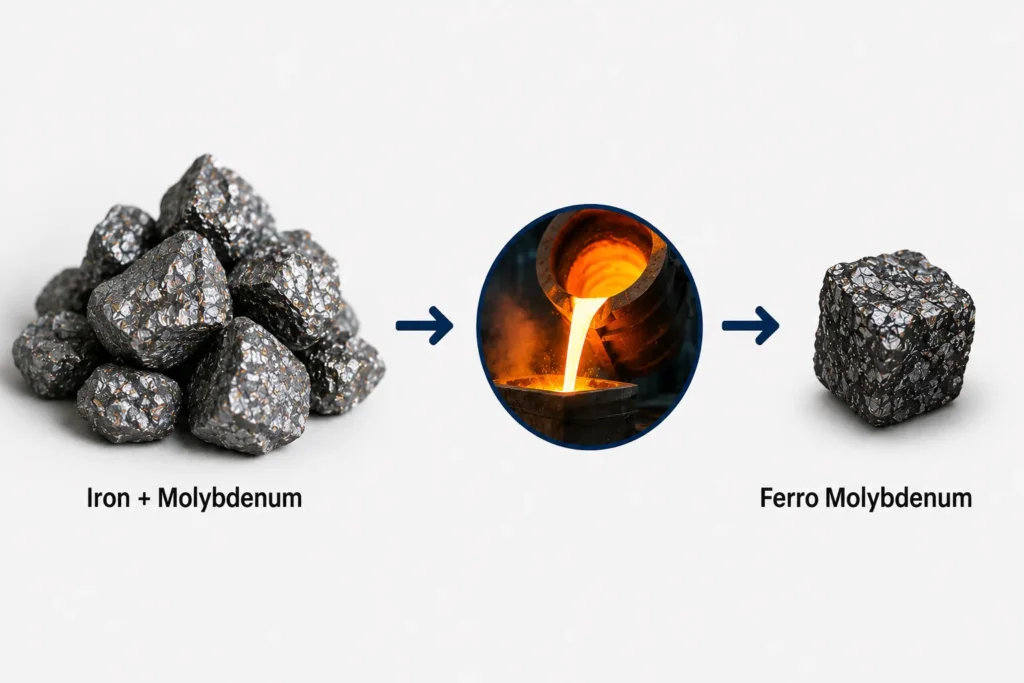
Ferro Molybdenum is a ferroalloy made primarily from iron and molybdenum. It is widely used as an alloying material in steel production to introduce molybdenum into molten steel.
Molybdenum offers several valuable properties that make it an essential element in many steel grades.
It helps improve:
- Tensile strength
- Hardness
- Wear resistance
- High-temperature performance
- Corrosion resistance
- Toughness under heavy loads
Because of these benefits, Ferro Molybdenum is commonly used in structural steel, tool steel, stainless steel, pressure vessel steel, and other engineering-grade alloys.
Why High-Strength Steel Depends on Material Consistency
High-strength steel is manufactured under carefully controlled conditions.
The chemical composition of every alloy addition must remain as consistent as possible. Even small variations can affect the final mechanical properties of the steel.
This is one reason why manufacturers place great importance on consistent Ferro Molybdenum quality.
Reliable alloy material helps maintain:
- Stable steel chemistry
- Better alloy recovery
- Predictable production results
- Reduced process adjustments
- Consistent finished products
For manufacturers producing large volumes of steel, consistency is often more valuable than finding the lowest purchase price.
What Makes a Good Ferro Molybdenum Manufacturer?
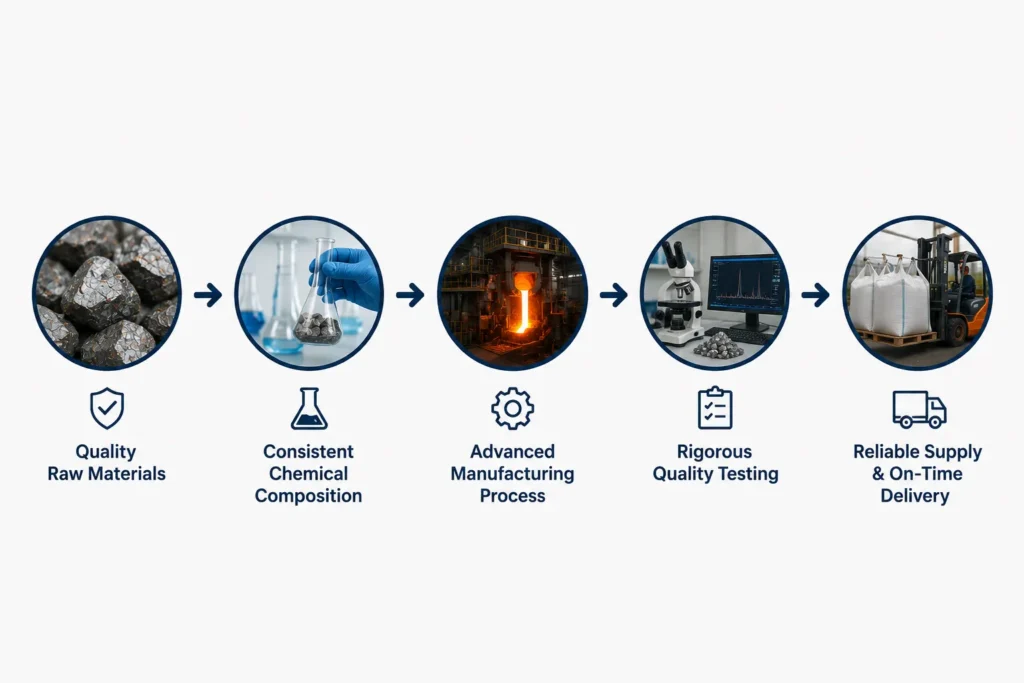
Not every manufacturer follows the same production standards.
While products may appear similar on paper, differences in manufacturing practices can affect quality and long-term performance.
Here are some important factors to evaluate.
Strong Raw Material Selection
The manufacturing process begins with raw materials.
A reliable manufacturer carefully selects high-quality input materials to reduce contamination and improve consistency.
Better raw materials often lead to better alloy performance.
Consistent Chemical Composition
Every production batch should meet the required specifications.
When chemical composition remains consistent, steel manufacturers can operate with greater confidence and fewer production adjustments.
Batch consistency is one of the strongest indicators of a dependable manufacturer.
Modern Manufacturing Practices
Efficient production methods help create uniform alloy materials.
Manufacturers that invest in proper process control generally produce more reliable Ferro Molybdenum.
Consistency during manufacturing often translates into consistency during steelmaking.
Quality Testing Before Delivery
Quality should never be assumed.
Trusted manufacturers perform regular laboratory testing before products are shipped.
Typical testing may include:
- Chemical analysis
- Impurity checks
- Batch verification
- Product inspection
This helps ensure customers receive material that matches their requirements.
The Hidden Costs of Buying Low-Quality Ferro Molybdenum
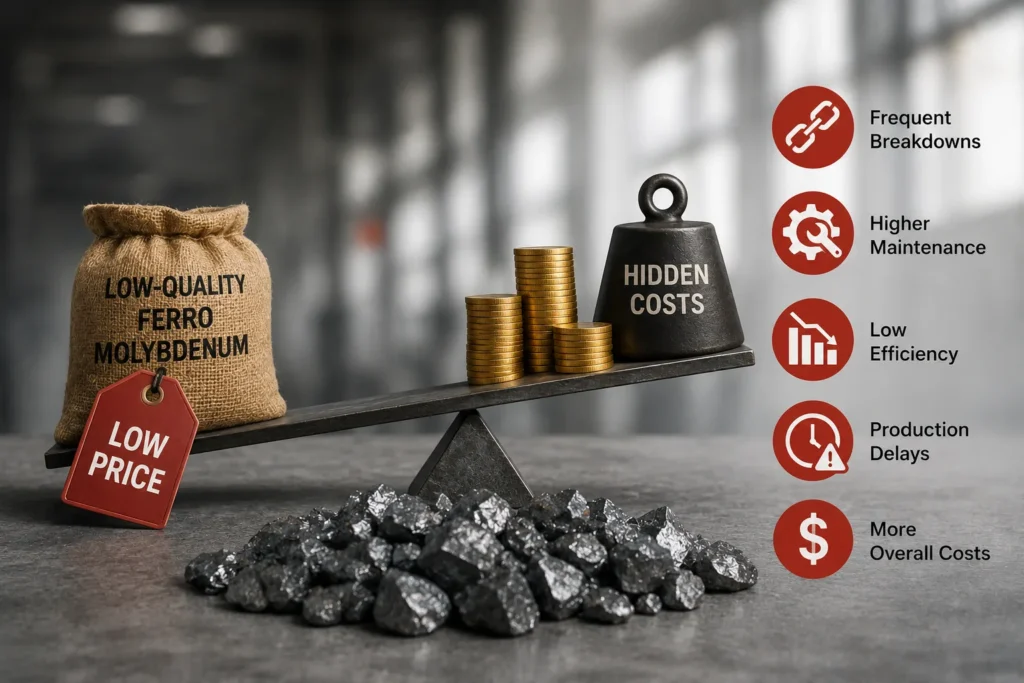
Lower prices can be attractive.
However, industrial buyers often discover that inconsistent materials create costs that are not visible during purchasing.
Some of these hidden costs include:
Increased Alloy Consumption
Poor recovery may require additional alloy additions to achieve target chemistry.
More Production Interruptions
Inconsistent material sometimes forces operators to make process corrections during production.
Higher Scrap Rates
Variations in steel chemistry can affect finished product quality.
Delivery Risks
Suppliers without reliable production capacity may struggle to meet delivery schedules.
When these factors are considered together, choosing a dependable manufacturer often becomes the more economical decision.
Questions Every Industrial Buyer Should Ask
Before placing a bulk order, buyers should ask a few practical questions.
- Does the manufacturer provide consistent quality reports?
- How is each production batch tested?
- Can they supply material regularly throughout the year?
- Do they have experience serving steel manufacturers?
- How do they manage product packaging and transportation?
- What technical support do they provide if production issues arise?
The answers to these questions often reveal more about a supplier than the quotation itself.
Why Long-Term Partnerships Matter
Many successful steel companies work with the same alloy manufacturers for years.
There is a reason for this.
A trusted manufacturer becomes familiar with production requirements and customer expectations.
Over time, this relationship creates advantages such as:
- Better communication
- Reliable deliveries
- Consistent product quality
- Improved inventory planning
- Faster response to urgent requirements
Long-term partnerships reduce uncertainty and help maintain stable production.
Industries That Use High-Strength Steel Produced with Ferro Molybdenum
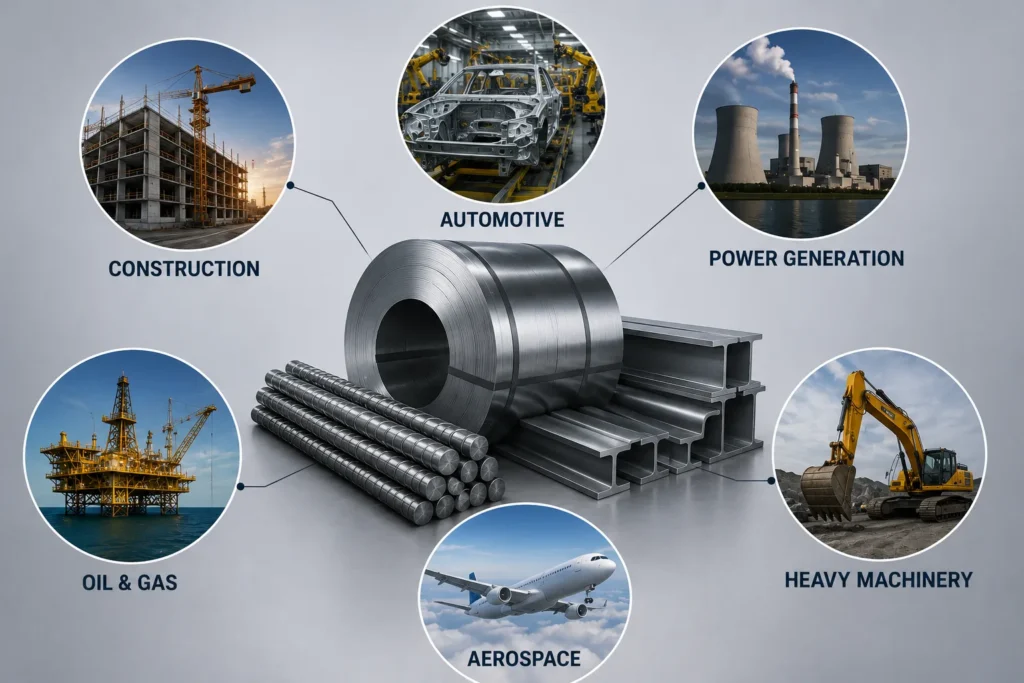
High-strength steel is used in applications where performance and reliability are critical.
Some common industries include:
- Oil and gas
- Automotive manufacturing
- Aerospace
- Construction
- Heavy engineering
- Mining
- Rail infrastructure
- Power generation
- Industrial machinery manufacturing
As engineering requirements continue to evolve, demand for dependable alloy materials is expected to remain strong.
A Small Detail That Can Make a Big Difference
One factor many buyers overlook is particle size consistency.
Even when the chemical composition meets specifications, irregular particle sizes can influence alloy recovery and melting behavior.
Manufacturers that control particle size during production often help customers achieve more predictable furnace performance.
It is a small detail, but one that experienced steelmakers pay close attention to.
Choosing Quality Over Short-Term Savings
Selecting a Ferro Molybdenum manufacturer should never be based only on price.
The true value of a supplier lies in their ability to deliver consistent quality, dependable service, technical knowledge, and reliable supply over many years.
When manufacturers invest in better alloy materials, they often improve production efficiency, reduce waste, and produce stronger, more consistent steel products.
The right manufacturing partner becomes part of the production process rather than simply another supplier.
Looking for Reliable Alloy Material Solutions?
Consistent alloy materials are essential for producing high-quality steel and maintaining efficient manufacturing operations.
Dsalloyd Pvt Ltd supplies premium Manganese Metal Flakes and Noble Alloys to customers across the metallurgical and steel industries. The company focuses on quality, dependable supply, and customer satisfaction to help manufacturers achieve reliable production results.
Whether you are involved in steelmaking, foundry operations, or alloy processing, Dsalloyd Pvt Ltd is committed to supporting your business with trusted alloy material solutions.
Visit https://www.dsalloyd.com/ to learn more about their products and connect with their team.
Frequently Asked Questions (FAQs)
Ferro Molybdenum is used in steelmaking to introduce molybdenum into alloy steel, improving strength, hardness, corrosion resistance, and heat resistance.
It enhances the mechanical properties of steel, making it suitable for demanding industrial applications that require durability and reliability.
Look for consistent product quality, modern manufacturing practices, laboratory testing, reliable deliveries, and strong industry experience.
Yes. Variations in chemistry or particle size can influence alloy recovery, process stability, and the final properties of the steel.
Oil and gas, aerospace, automotive, construction, mining, heavy engineering, railways, and power generation are among the major industries.
Consistent batches reduce production adjustments, improve alloy recovery, and help maintain stable steel quality.
Not necessarily. Lower-priced materials may lead to higher production costs if they cause inconsistency, waste, or operational issues.
Manufacturers can explore the alloy solutions offered by Dsalloyd Pvt Ltd, including Manganese Metal Flakes and Noble Alloys for industrial and metallurgical applications.
