

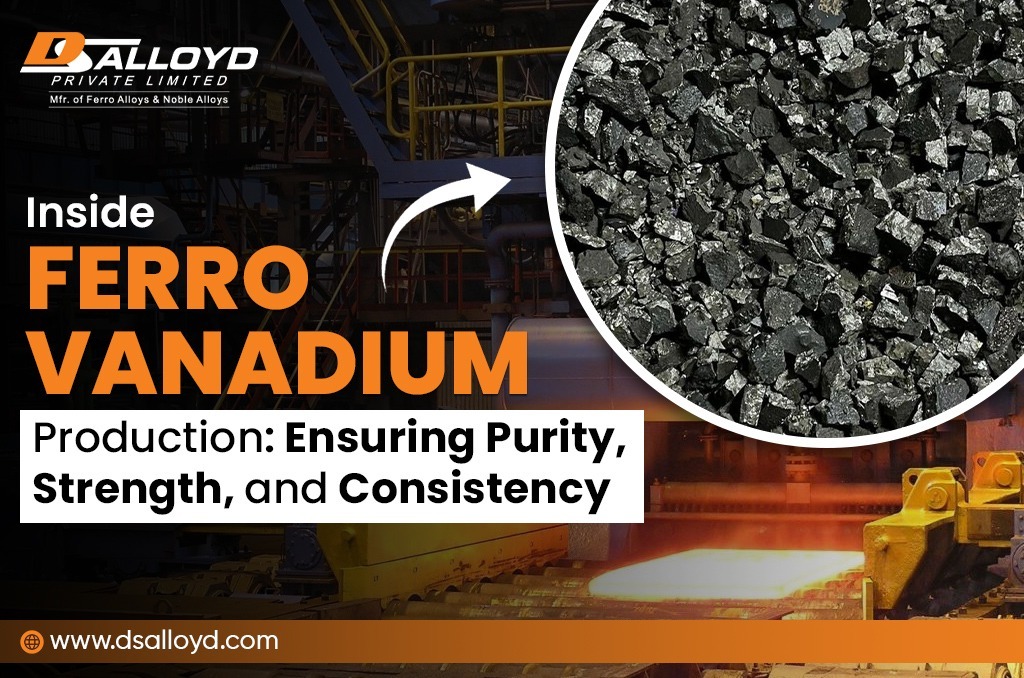
Inside Ferro Vanadium Production: Ensuring Purity, Strength, and Consistency
When people talk about steel manufacturing, the conversation usually goes toward big things. Large furnaces, rolling mills, heavy machinery, automation systems, and production capacity often become the center of attention. Those things are important, of course, but people working inside the industry know that the final quality of steel often depends on much smaller details. One of those details is alloy selection and consistency.
Among the different alloying materials used in steelmaking, ferro vanadium holds a very important place. It is not usually visible in the final product and it rarely gets discussed outside industrial circles, yet its role is significant. Ferro vanadium contributes to strength, durability, toughness, and overall steel performance. Even a relatively small addition can create noticeable changes in the properties of steel.
The challenge, however, is not simply producing ferro vanadium. The real challenge is producing it with consistent purity and reliable quality every single time. In industrial manufacturing, one good batch is not enough. Steel plants need materials that perform predictably over months and years, not just once.
That is where production quality becomes a much bigger topic than many people initially assume.
Understanding the role of ferro vanadium in modern steel
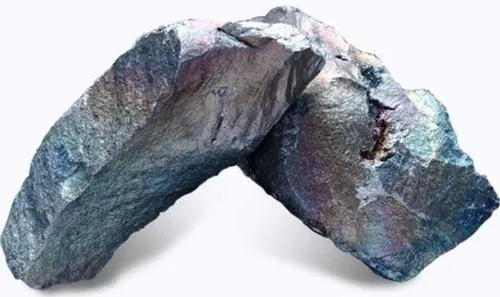
Ferro vanadium is an alloy primarily made from iron and vanadium. It is added during steel production because vanadium helps refine grain structure and improve mechanical properties. When properly used, it allows steel manufacturers to create products that are stronger while maintaining good toughness and wear resistance.
This becomes especially important in applications where materials are expected to perform under stress or harsh environments. Industries such as infrastructure, automotive manufacturing, heavy engineering, pipelines, tools, and industrial equipment frequently rely on vanadium-enhanced steel grades.
What makes ferro vanadium interesting is that the amount added is usually not extremely large. Small additions can still influence the behavior of steel significantly. Because of that, material consistency becomes very important.
If the alloy behaves differently from batch to batch, steel manufacturers often need additional process adjustments. That may sound minor, but over repeated production cycles those small adjustments begin creating operational challenges.
Producing ferro vanadium is more complicated than it appears
Sometimes industrial production gets described in an oversimplified way. Raw material enters one side of a process and finished alloy comes out from the other side.
Actual production rarely works that smoothly.
Ferro vanadium manufacturing involves multiple stages where quality must be controlled carefully. The process starts with raw material selection because the purity and composition of input materials affect everything that follows afterward.
After raw material preparation, production conditions become extremely important. Temperature control, reduction processes, reaction stability, impurity management, and composition balancing all influence the final product.
Even slight changes during processing can affect:
- chemical consistency
- impurity levels
- alloy recovery behavior
- particle characteristics
- melting performance
Individually, these factors may seem small. Together, they influence how ferro vanadium performs later inside steel production environments.
Producing acceptable material once may not be difficult. Producing highly consistent material repeatedly is where manufacturing expertise becomes visible.
Purity involves more than chemical percentages
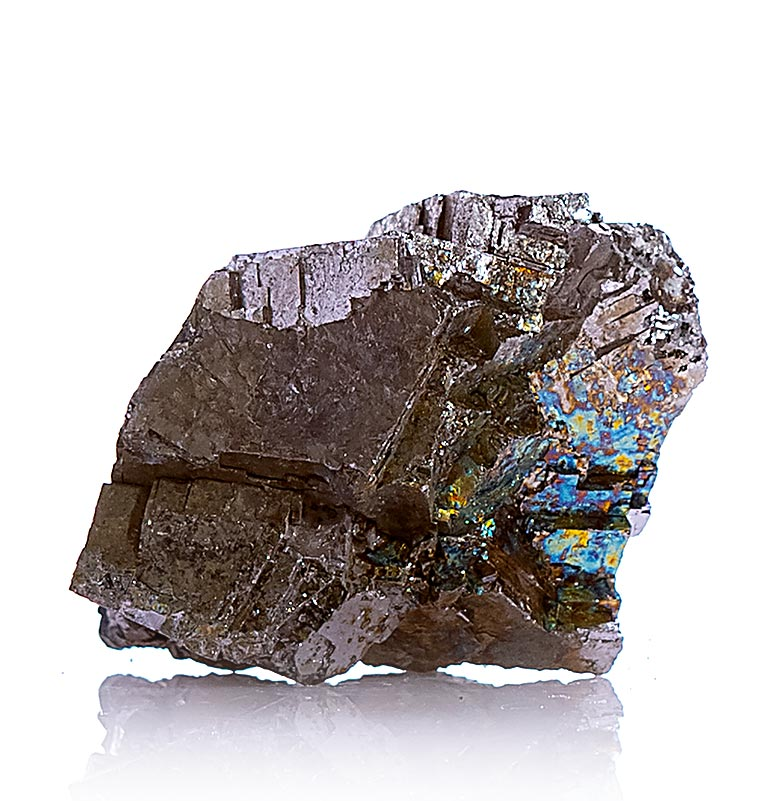
The word “purity” often makes people think about laboratory reports and specification sheets. While chemistry certainly matters, steel plants frequently evaluate materials beyond just numbers on paper.
A batch can technically satisfy chemical specifications and still perform differently during actual use.
This is something experienced production teams notice quickly.
Operators sometimes observe differences in:
- melting response
- alloy recovery rates
- feeding behavior
- reaction timing
- process stability
These observations may sound informal, but they usually come from years of practical experience.
People who work around alloy manufacturing every day develop a sense for material behavior. They notice small changes long before data reports fully explain them.
That is one reason why purity in industrial manufacturing becomes more complex than simply reaching a target percentage.
Consistency matters alongside composition.
Why steel plants value predictable behavior
Inside steel plants, uncertainty creates extra work.
When alloy materials remain stable over time, operators learn how the process behaves. Production settings become optimized and teams develop routines around expected performance.
However, if alloy behavior changes repeatedly between batches, daily operations become less predictable.
Small differences begin creating larger effects.
Production teams may need additional monitoring. Process parameters may require adjustments. Quality checks become more frequent. Operators spend more time reacting to variation instead of focusing on efficient production.
None of these situations individually create a major problem.
But together they slowly reduce operational efficiency.
That is why many experienced steel manufacturers eventually prioritize consistency over temporary cost savings.
Hidden costs often appear where people least expect them
Procurement decisions frequently begin with pricing discussions.
This is understandable because manufacturing operations naturally monitor costs closely.
However, over time production teams start identifying expenses that never appear directly in purchase invoices.
Inconsistent alloy materials can create:
- repeated process adjustments
- longer monitoring periods
- production interruptions
- additional testing
- increased troubleshooting efforts
- occasional material losses
These costs develop gradually. Since they appear indirectly, they are often overlooked initially.
But after enough production cycles, many facilities realize that stable material performance creates long-term operational advantages.
Sometimes reducing variation saves more than reducing purchase cost.
Strength and consistency are closely connected
People often assume steel strength improves simply by increasing alloy content.
Reality is more balanced than that.
Mechanical performance depends heavily on consistency.
Impurities, compositional shifts, and production variation can influence final steel properties. Even small differences become important when production scales become large.
Steel plants rely on repeatability. They need confidence that one production cycle behaves similarly to the next.
Reliable ferro vanadium production supports that repeatability.
Without consistent alloy performance, maintaining stable quality becomes significantly harder.
Why supplier reliability matters alongside manufacturing quality
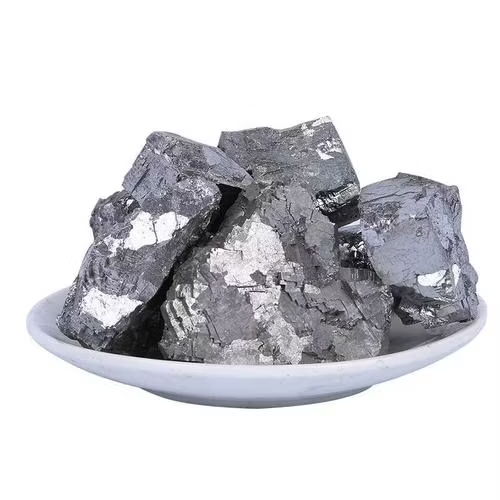
Ferro vanadium itself is only one part of steelmaking.
Steel production involves several alloying materials working together.
Materials such as:
- manganese
- chromium
- molybdenum
- titanium
- additional ferro alloys
all contribute to final product characteristics.
When variation appears across multiple materials at once, identifying the actual source becomes difficult.
This is why experienced manufacturers increasingly focus on supplier consistency, not simply product availability.
Stable suppliers reduce unnecessary uncertainty.
And in manufacturing environments, reducing variables usually improves efficiency.
Where Dsalloyd Pvt Ltd fits into the alloy supply chain
Modern steel and alloy manufacturing depends heavily on reliable material sourcing. Maintaining consistency across every input material helps production teams avoid unnecessary complications.
Dsalloyd Pvt Ltd supplies industrial materials including:
- Manganese Metal Flakes
- Noble Alloys
used across steel and alloy manufacturing applications.
Reliable sourcing becomes valuable because material consistency affects more than purchasing decisions. It influences process stability, operational predictability, and long-term production efficiency.
You can explore more at: https://www.dsalloyd.com/
Final thoughts
Inside ferro vanadium production, purity, strength, and consistency are closely connected. Producing material with stable performance requires much more than simply reaching a target composition.
Raw material quality, process control, manufacturing experience, and consistency all play important roles.
And perhaps that explains why experienced steel plants often ask a different question over time.
Instead of asking only, “What is the lowest price?”
they eventually begin asking,
“Which supplier gives us fewer surprises?”
Because in industrial manufacturing, predictable performance often creates value that extends far beyond the material itself.
FAQs
Ferro vanadium is commonly used in steel manufacturing to improve strength, toughness, wear resistance, and grain refinement.
Purity influences alloy behavior, consistency, and overall steel quality during production.
Yes. Even minor composition differences can create process adjustments and influence final performance.
Consistent materials reduce uncertainty, improve predictability, and help maintain smoother operations.
Construction, automotive, pipelines, heavy engineering, and industrial equipment sectors commonly use vanadium-strengthened steel.
