

Atomized Ferro Silicon Powder
Ferro silicon is used in many areas of metal production, welding, casting, and mineral processing. But ferro silicon does not always come in the same form. Depending on the application, it can be supplied as lumps, granules, or fine powder.
One form that has become useful for applications needing controlled particle size and good mixing is atomized ferro silicon powder.
At first, the manufacturing process may sound complicated. In simple terms, it involves taking molten ferro silicon, breaking the liquid metal into very small droplets, cooling those droplets quickly, and then separating the powder according to the required size.
The important part is that every stage can affect the final material. The alloy composition, temperature, atomization method, cooling conditions, particle size, and screening process all have a role to play.
Let’s look at how atomized ferro silicon powder is made and why each stage matters.
What Is Atomized Ferro Silicon Powder?
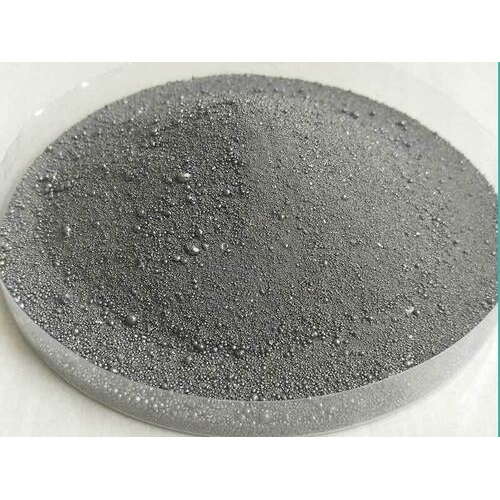
Ferro silicon is an alloy made mainly from iron and silicon. Different grades are produced depending on the amount of silicon and the requirements of the end application.
When ferro silicon is converted into powder through an atomization process, the molten alloy is broken into small droplets. These droplets cool and solidify into fine particles.
Water atomization is one commonly used production method. The resulting particles can be relatively fine and, depending on the process, can have a more rounded shape compared with conventionally crushed or milled material.
The exact particle characteristics depend on the equipment and production conditions.
This is important because a powder used in welding applications, for example, may have different requirements from ferro silicon powder used in mineral processing.
Where Does the Process Begin?
The production process starts with the ferro silicon alloy itself.
Before atomization, the alloy needs to have the required chemical composition. Ferro silicon can be produced by melting and reducing suitable raw materials in a furnace. Historical production methods, for example, have used steel scrap, quartz and a reducing agent in a submerged-arc furnace to produce ferro silicon.
Once the alloy has been produced, it is prepared for the next stage.
The quality of the starting alloy matters because atomization does not magically remove unwanted elements. If the chemistry of the molten material is not controlled properly, the final powder may not meet the required specification.
Step 1: Preparing the Ferro Silicon Melt
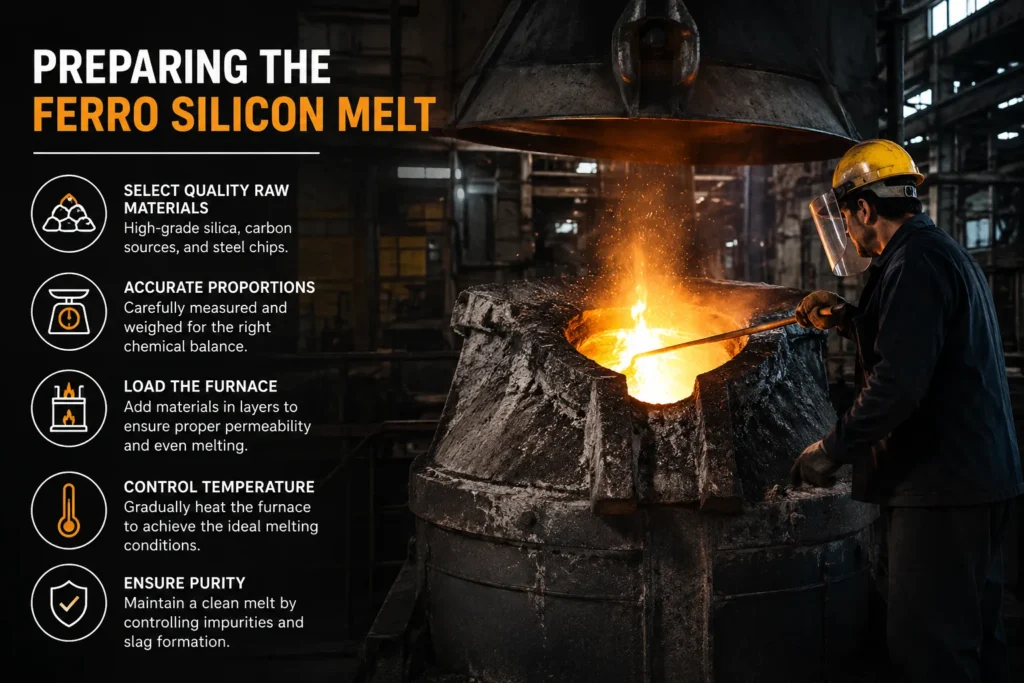
The first major stage is getting the ferro silicon into a molten state.
The alloy is heated to a suitable temperature so that it can flow through the atomization system. Temperature control is important here.
If the molten metal is not in the right condition, it can affect how easily it breaks into droplets.
At an industrial level, operators need to keep an eye on factors such as:
- Alloy composition
- Melt temperature
- Flow rate
- Cleanliness of the molten material
- Condition of the atomization equipment
These may sound like small details, but they can influence the consistency of the final powder.
Step 2: The Molten Metal Enters the Atomization System
This is where the process gets interesting.
The molten ferro silicon is directed through a controlled outlet or nozzle. At this point, a high-pressure medium is used to break the molten stream into tiny droplets.
For water atomization, high-pressure water is used to break up the molten metal. The sudden contact with water also cools the droplets quickly, causing them to solidify into small particles.
This basic sequence is commonly described as:
Melting → Atomization → Cooling → Screening
Some production lines include additional stages such as drying before screening.
Step 3: Breaking the Molten Metal Into Tiny Droplets
The word “atomized” comes from what happens during this stage.
Instead of allowing the entire stream of molten ferro silicon to cool into one large piece, the stream is broken into thousands or millions of much smaller droplets.
Imagine pouring a continuous stream of water and then spraying it through a nozzle. The large stream becomes many small drops.
The same basic idea is applied to molten metal, although the temperatures and equipment involved are obviously very different.
The size of these droplets affects the eventual particle size of the powder.
This is one reason atomization needs to be carefully controlled.
Step 4: Rapid Cooling and Solidification
Once the molten ferro silicon is broken into droplets, the droplets cool rapidly.
With water atomization, the water absorbs heat from the molten material. As the droplets lose heat, they solidify into ferro silicon particles.
The cooling stage has an important effect on the shape and characteristics of the powder.
Rapid solidification is also one reason atomized ferro silicon can have different physical characteristics compared with ferro silicon that has simply been crushed or milled.
Some suppliers describe atomized ferro silicon as having spherical or relatively rounded particles, along with good flow and spreading properties.
However, the exact particle shape is not identical for every product. It depends on the atomization technology and operating conditions.
Step 5: Collection and Drying
After atomization, the solid particles need to be collected from the water or atomization system.
At this point, the material may contain moisture because water was used during the atomization process.
The powder therefore goes through a drying stage where required.
Drying is especially important when the finished product needs to meet a specific moisture specification or when it is being packed and transported for industrial use.
A typical water-atomized ferro silicon production route can therefore include electric furnace smelting, water atomization, drying and screening.
Step 6: Screening the Powder
Not every particle produced during atomization will be exactly the same size.
Some particles will be larger.
Some will be smaller.
This is where screening becomes important.
The dried powder is passed through suitable screens or classification equipment to separate particles according to size.
Different applications may require different particle-size ranges. For example, commercially available atomized ferro silicon products can be supplied in different mesh sizes, including 40 mesh, 50 mesh, 60 mesh and 100 mesh for certain grades and applications.
The customer requirement normally determines the final size specification.
Why Particle Size Matters
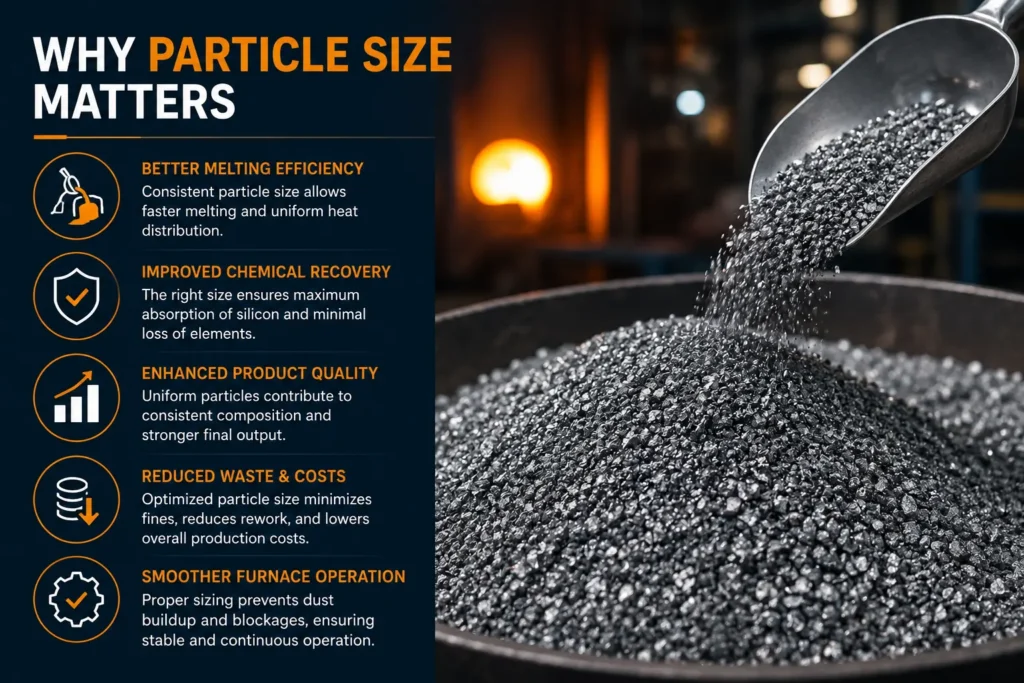
Particle size is not just a number written on a product specification sheet.
It can affect how a powder behaves during handling and how effectively it mixes with other materials.
A finer powder generally provides more surface area relative to its mass. This can be useful in applications where the material needs to react, mix, or distribute efficiently.
For example, atomized ferro silicon is used in welding electrode production, where it can contribute to deoxidation and other functions within the electrode coating.
In heavy-medium separation, ferro silicon powder is also used because of its density and magnetic properties. Low-silicon grades such as FeSi15 are used in dense-medium mineral separation applications.
So, the “right” particle size depends heavily on what the buyer plans to do with the material.
Water Atomization vs Gas Atomization
Water is not the only medium that can be used for atomizing metals.
Gas atomization is another production method. Instead of water, high-velocity gas is directed at the molten metal stream to break it into droplets.
Gas atomization is often associated with producing more spherical powders and can be selected where particular powder characteristics are required.
The choice between water and gas atomization depends on the required product characteristics, application, production economics, and technical requirements.
For this reason, buyers should not simply ask for “ferro silicon powder.” They should also discuss the grade, particle size, production method, chemistry, and application with the supplier.
Where Is Atomized Ferro Silicon Powder Used?
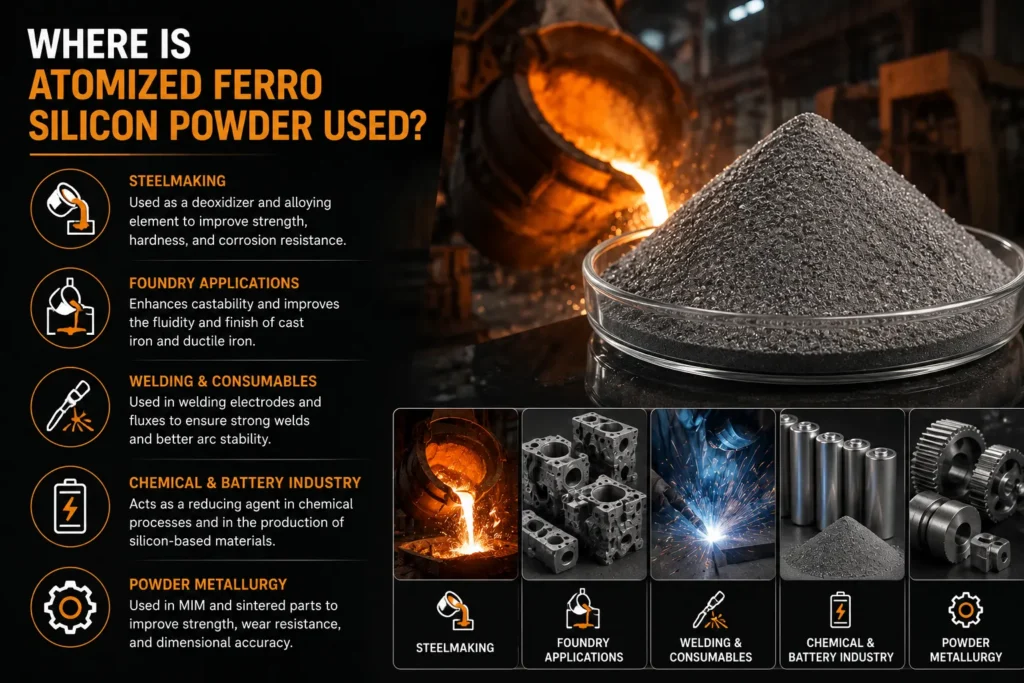
The use of atomized ferro silicon powder depends on its grade and particle characteristics.
Welding
One of the better-known applications is welding electrode production.
Ferro silicon can work as a deoxidizing material in welding electrode coatings. The controlled powder form also makes it easier to incorporate the material into the electrode coating mixture.
Mineral Processing
Certain ferro silicon powders are used in dense-medium separation.
Because ferro silicon has useful density and magnetic characteristics, it can be used to create a heavy medium for separating minerals according to density. This is particularly relevant in processes involving materials such as coal and certain ores.
Metallurgical Applications
Ferro silicon is also used in metallurgy for functions such as alloy adjustment and deoxidation.
The exact role depends on the grade and the production process in which it is being used.
What Quality Checks Matter?
A good atomized ferro silicon powder is not judged only by its appearance.
Industrial buyers normally need to look at both chemical composition and physical characteristics.
Some of the important checks include:
Chemical Composition
The silicon percentage is one of the main specifications, but other elements such as carbon, manganese, sulphur and phosphorus may also need to be controlled depending on the grade.
Particle Size
The powder needs to meet the agreed mesh or micron-size range.
Moisture
For water-atomized products, moisture control is particularly important after the drying stage.
Consistency Between Batches
A buyer does not want one batch to behave differently from the next. Consistency is therefore an important part of industrial material supply.
Packaging
Powders need suitable packaging to prevent contamination and moisture pickup during storage and transportation.
Why the Manufacturing Process Matters to Buyers
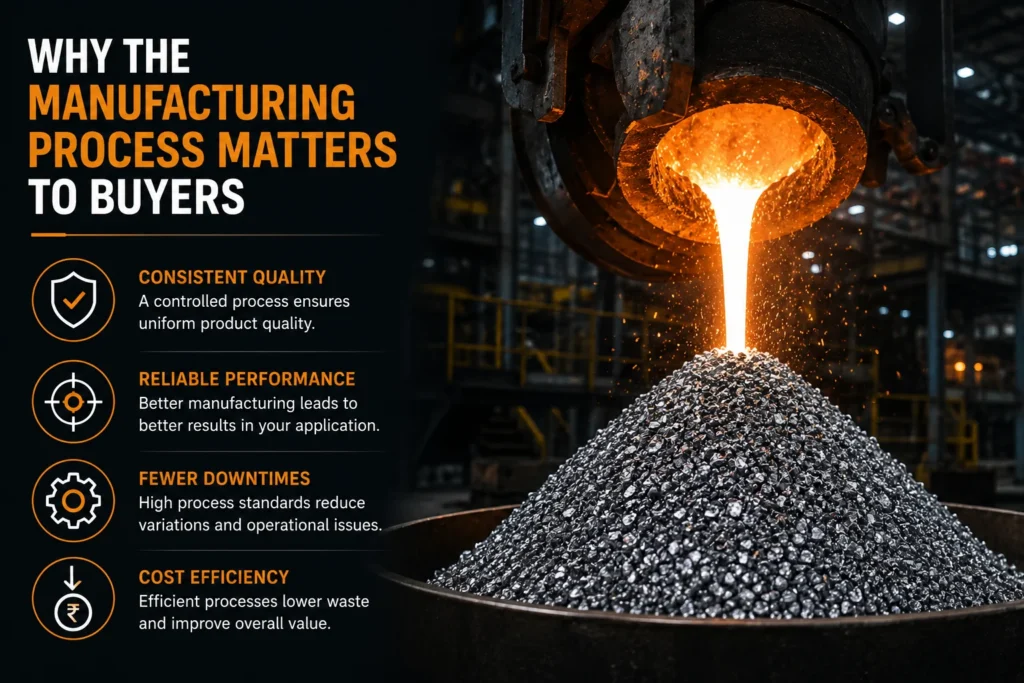
When buying industrial alloy powders, it can be tempting to focus only on the price per kilogram.
But a cheaper powder may not always be the better option if its chemistry, particle size or consistency is not suitable for the application.
A buyer should ideally understand:
- What grade is being supplied?
- What is the silicon percentage?
- What are the impurity limits?
- What is the particle-size range?
- Is the powder water atomized or gas atomized?
- What quality checks are carried out?
- How is the powder packed?
- Can the supplier provide batch-wise test certificates?
These questions can prevent problems later in production.
How Atomized Ferro Silicon Differs From Milled Ferro Silicon
Both products are made from ferro silicon, but the production route is different.
Milled ferro silicon is generally produced by mechanically reducing larger pieces of ferro silicon into smaller particles.
Atomized ferro silicon, on the other hand, is formed by breaking molten metal into droplets and allowing those droplets to solidify.
Because of this difference, the two powders can have different particle shapes, size distributions and flow characteristics.
The choice should therefore be based on the application rather than simply choosing the cheapest powder available.
The Importance of Choosing the Right Alloy Supplier
In industrial manufacturing, raw materials become part of a much larger production chain.
A small variation in chemistry or particle size can sometimes affect the next stage of production. This is why buyers generally prefer suppliers who understand technical specifications and can provide consistent material.
For companies working with ferroalloys, manganese products and specialty alloy materials, the supplier’s product range and technical understanding can also make procurement easier.
DS Alloyd Pvt Ltd works in the ferroalloy and specialty alloy space, supplying materials including Manganese Metal Flakes and Noble Alloys. Its noble alloy range includes Ferro Molybdenum, Ferro Vanadium and Ferro Niobium.
While atomized ferro silicon powder is a separate material category, businesses looking for reliable alloy materials can explore DS Alloyd’s range for their manganese and noble alloy requirements.
Final Thoughts
The production of atomized ferro silicon powder is more than simply turning ferro silicon into a fine powder.
It is a controlled process where melting, atomization, rapid cooling, drying and screening all play a role.
The final powder needs to match the application in terms of chemistry, particle size and physical characteristics. This is particularly important in industries where small changes in raw material quality can affect the final production process.
For buyers, understanding how the material is made is useful because it makes supplier discussions much easier. Instead of looking only at the price, they can ask the right questions about grade, particle size, testing, consistency and packaging.
And when it comes to industrial alloy materials, choosing a supplier who understands these requirements can make a real difference to long-term procurement.
Frequently Asked Questions
Atomized ferro silicon powder is a fine form of ferro silicon produced by breaking molten ferro silicon into small droplets and allowing them to cool and solidify. Water atomization is one commonly used production method.
A typical water-atomized production process involves ferro silicon melting, atomization, rapid cooling, drying and screening. The exact process can vary depending on the grade and equipment used.
Atomized powder is produced from molten ferro silicon by forming and solidifying small droplets. Milled powder is produced by mechanically crushing or grinding solid ferro silicon.
Depending on its grade, it can be used in welding electrode production, mineral processing and various metallurgical applications.
Particle size affects how the powder flows, mixes and behaves during processing. Different industrial applications may require different particle-size ranges.
No. Gas atomization is another method used to produce metal powders. The choice depends on the desired powder characteristics and application requirements.
Buyers should check chemical composition, particle size, impurity levels, moisture, consistency, packaging and relevant quality documentation.
DS Alloyd’s current website lists ferroalloy powders including Ferro Manganese powders and Ferro Silico Manganese powders, along with Manganese Metal Flakes and Noble Alloys. For specific ferro silicon powder requirements, buyers should confirm availability and grade directly with the company.
Looking for Reliable Alloy Materials?
If your business is sourcing Manganese Metal Flakes, Ferro Molybdenum, Ferro Vanadium, Ferro Niobium or other alloy materials, you can explore the range offered by DS Alloyd Pvt Ltd.
The company supplies manganese metal flakes and noble alloys for industrial and metallurgical applications, with a focus on consistent material supply and quality.
Visit DS Alloyd Pvt Ltd to explore its products and get in touch regarding your alloy material requirements.
